Italica near Seville

Overall Impact:                **** 4 stars – Italica delivers a mixed impression with a massive amphitheatre and high quality mosaics – but hard to understand as a major City.

Access                                *** 3 stars – road access to site entrance

Atmosphere                      ** 2 star – Italica is a site that is hard to make sense, although with star elements

Other                                  **** 4 stars – birth-place of 3 Emperors!

Italica should impress more, it is after all the birthplace of two of unquestionably the most important Roman Emperors – Trajan and Hadrian in the 2nd Century CE, and possibly a third Theodosius I of Great in the 4th Century.

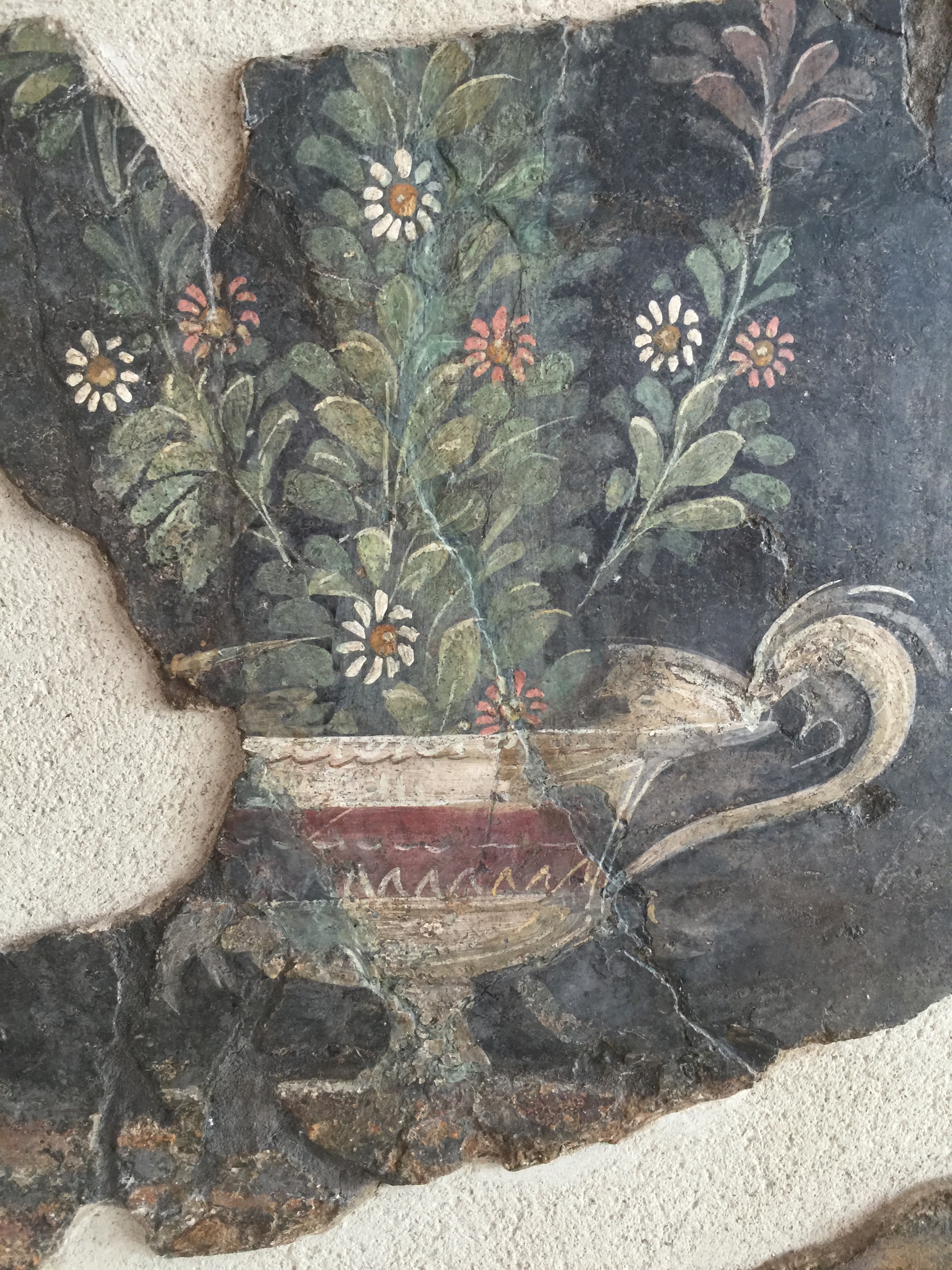
It has the third largest amphitheatre in the Empire, and some remarkable mosaics – including a very witty Neptune with putti hunting  crocodiles and fighting cranes and a delightful one with bird pictures.  What is more when we were there after a very rainy winter day, the sewer system still appears to function.

The Seahorse mosaic in one of the mansions in Italica.

Perhaps it’s the contrast with the altogether amazing Merida which we had just visited the day before, that seems to put Italica in the shade?  Maybe the restored walls and portico pillars that line Hadrian’s wide avenues in the New Town, are just too neatly finished?  Maybe its the worry induced by at least three world class mosaics being open to all the elements has to throw at them?

Italica was founded as far back as 206 BCE by the great general Publius Cornelius Scipio, later called Africanus after he defeated Hannibal at Zama.  His great victory over Hannibal’s brother Hasdrubal at Ilipa was just up the road and Scipio settle his veterans from Italia, in Italica to dominate the areas around the River Guadalquivir.

The ‘Birds’ Mosaic at Italica.

Scipio’s Old Town lies under the modern Santaponce.  Trajan was born in Italica on 18 September 53 CE in Italica in a non patrician family of Italian and possibly Iberian origin.  Hadrian was born in Italica on 24 January 76 CE and was the adopted heir of the childless Trajan, who was the maternal cousin of Hadrian’s father.

The substantial remains of the Amphitheatre at Italica, which with CGI additions was used as a set for Game of Thrones.

Hadrian expanded Italica northwards with the New City, and made it a Colonia Aelia Augusta Italica.  He added temples including a meassinve Trajaneum and built the amphitheatre that could seat 25,000 spectators – half the Colisseum itself.  This was both a bold statement and a massive financial commitment to funding Games and Spectacles by the local elite of Italica.  Large well appointed houses were built for this elite in the City.

It is therefore perhaps not surprising that Italica’s prosperity shrunk with the end of the Antonine Dynasty with which it was so closely connected.  Also the River Gaudalquivir had shifted course and silted up, which favoured Hispalis (modern Seville).

General Views across Italica.

Italica carried on in a reduced state like a dowager fallen on hard times.  It was used as a stone quarry by Moors and Christian regimes alike.  Today it has some monuments like the Amphitheatre, but not much extraordinary to excite the visitor, except it’s general size and the memories of Trajan and Hadrian.

Italica in Summary

Italica is a large and sprawling site. The Amphitheatre is massive and impressive. The rest of the site has striking mosaics but how they fit in the houses is difficult to understand. The overall picture of how the City functioned is hard to fathom.

Lousonna (Lausanne – Vidy)

Overall Impact:               *** 3 stars – a nicely presented and well-maintained small town

Access                                ***** 5 stars – carpark next door, cycle, walking and Swiss buses

Atmosphere                      ** 2 stars – perfunctory pond for former lake-edge helps, as do the inventive Swiss visualisations

Other                                  ** 2 stars – you can get a feel for what it would have been like

IMG_4415
View over the offices along the north side of the Basilica.  One of the curious Swiss reconstruction viewing boxes can be seen.

As excellent as it was unexpected, we stumbled across the Roman small town of Lousonna on a visit to Lausanne, Switzerland, last week.

If you walk, cycle or drive along the shore of Lake Geneva (Lacus Lemannus) westwards from the Chateau of Ouchy, in the direction of Geneva, in about 2km (just past the modern offices of IMD) you come to a well-signposted Site Romain.  (Ouchy, by the way, is where Lord Byron wrote “The Prisoner of Chillon” in a comfortable lakeside cafe and where the Peace Treaty of Lausanne with Kemal Ataturk’s resurgent new state of Turkey  was signed in 1923.)

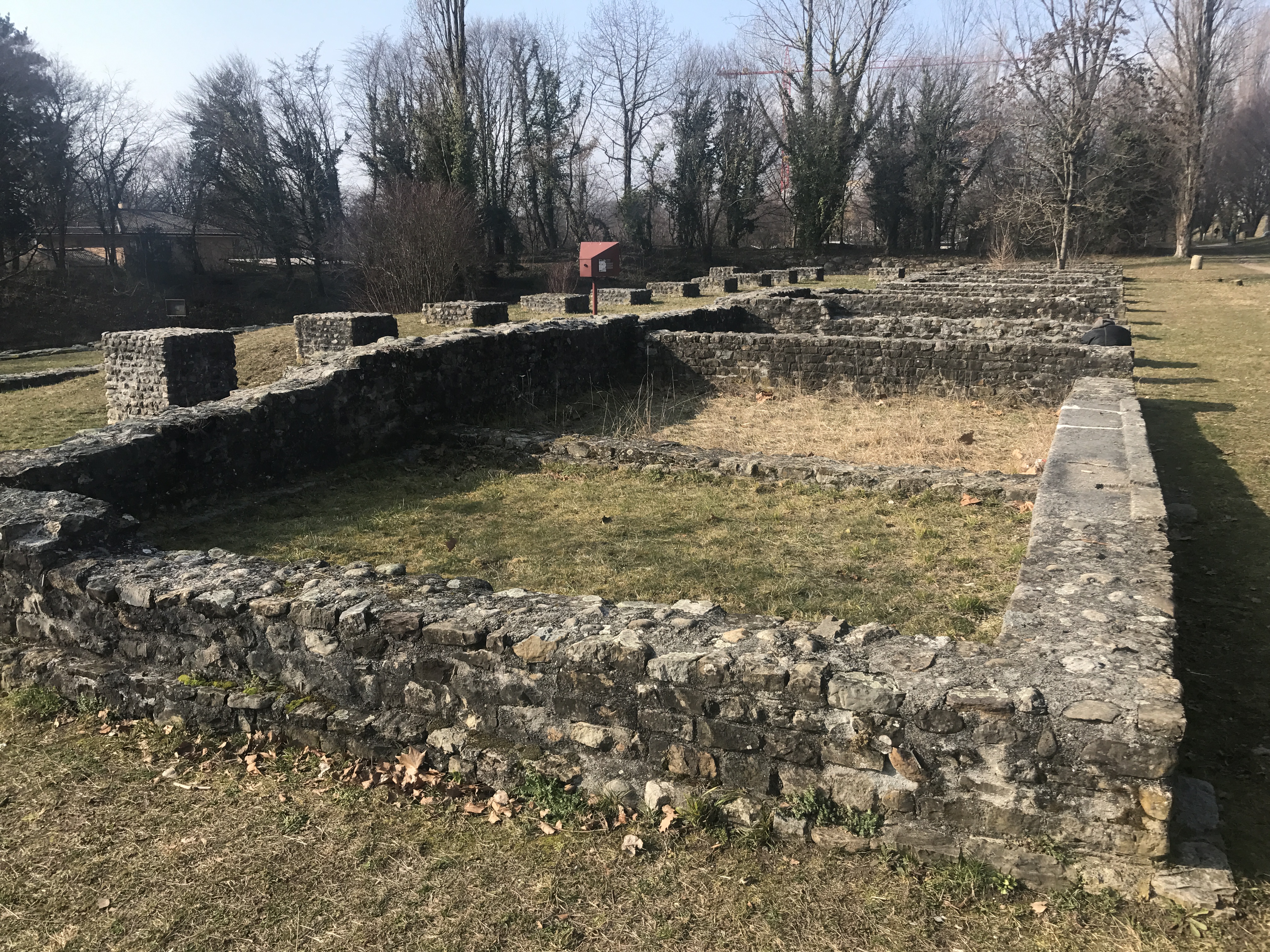
There is an extensive car park at the site, for those enjoying the lake and its many leisure facilities.  The site is open and generally well-cared for. Its reconstituted walls that will remind any of us who, as children, visited castles and abbeys across the UK of the well disciplined approach of the old Ministry of Public Building & Works!


IMG_4404

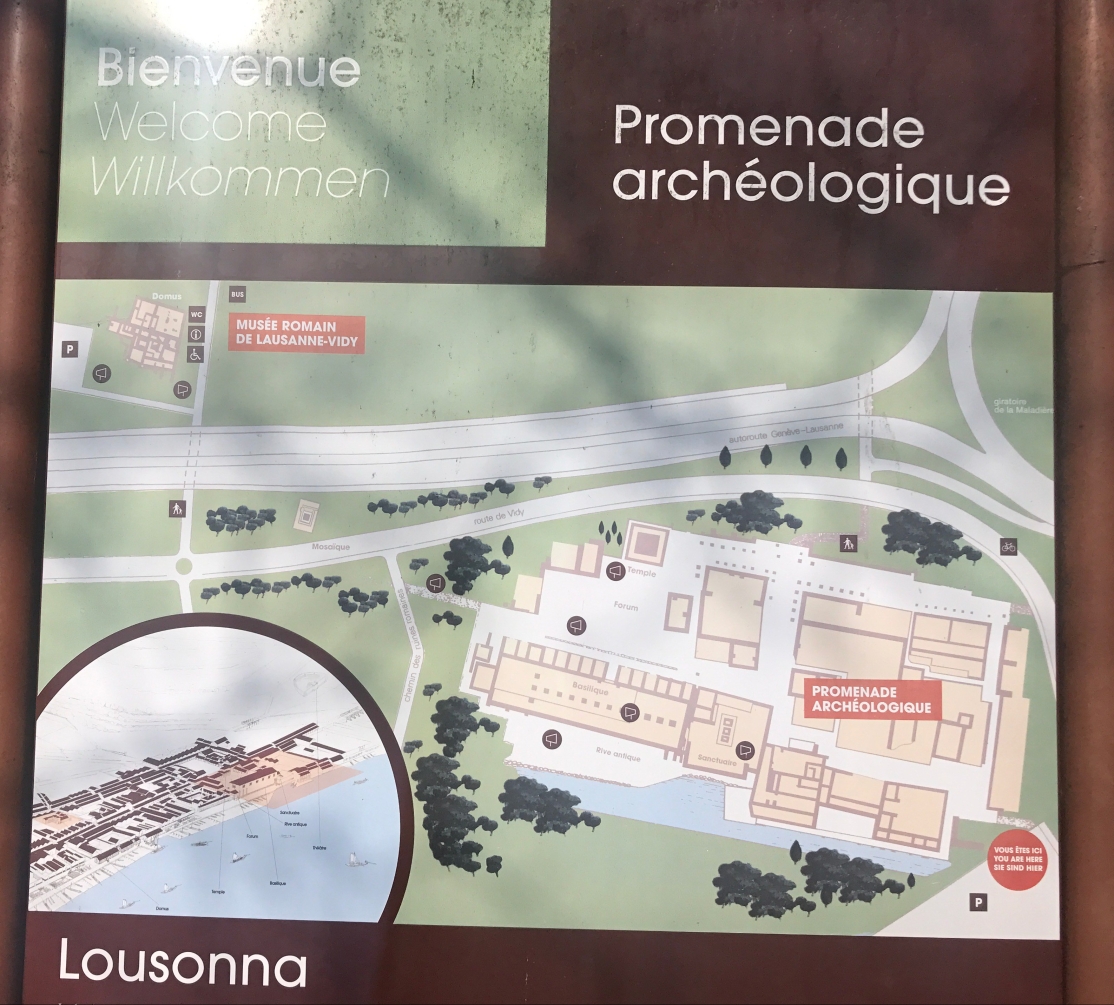
The plan is clear and presumably simplified for display purposes to a single final phase: here we see Lousonna at the height of its prosperity in the C3rd.  It is particularly helpful for understanding the site that the location of the former Roman waterfront of Lake Geneva has been recreated by a (slightly brackish) linear pond.   There are several plans set up around the site showing the key buildings, which consist of a rather impressive but curiously one-sided Basilica with the Hall on the lake-side and rooms opening off it on the land-side only.  The Basilica was 71m long by 19m wide with large pillars.  It is dated by the excavators to AD40 with later additions.


IMG_4412
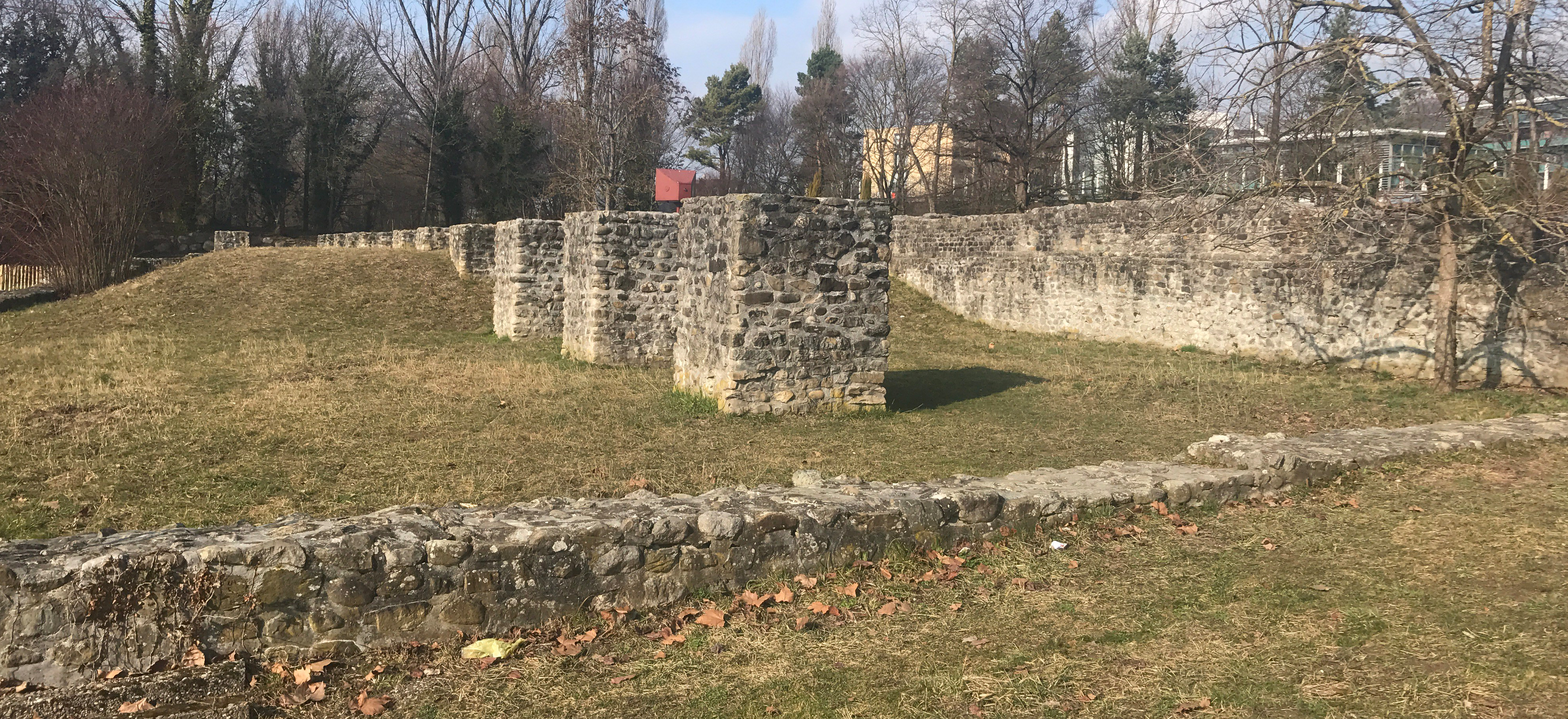
The Basilica with its substantial pillars – note the very solid consolidation.

The Basilica has a open Forum behind it with a typical square ‘Celtic’ temple familiar from Britannia.  On the lakeside next to the Basilica there is a ‘sanctuary’ with three ‘chapels’.  Here, according to inscriptions and figures discovered there and interpreted in the explanatory leaflet, Neptune, Hercules and Mercury were worshipped in order to safeguard Navigation, Voyages and Commerce.   There was also on the lakeside another very solidly built building, possibly a warehouse?

Across the site are reconstructions interpreting the remaining foundations, which can be viewed through eye pieces set in very-solidly Swiss-built metal viewers.


IMG_4418
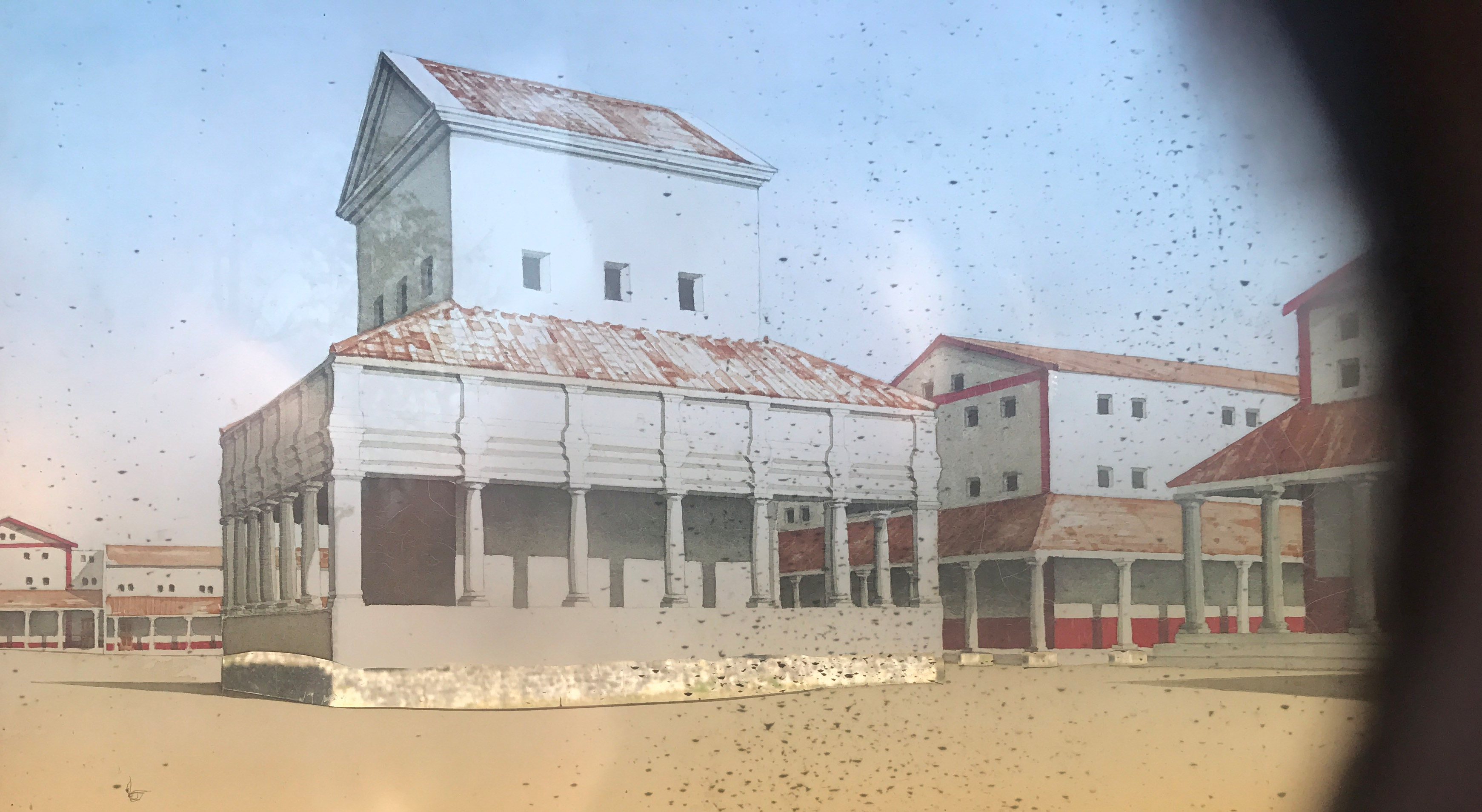
Looking through the viewer at an optical reconstruction based on the site foundations: here is the Temple.

All in all, you can get a feel for what this prosperous small Roman town on the lakeside grew into at its height.  The excavators estimate the population as 1,500 to 2,000, composed of merchants, fishermen, craftsmen and their families.  It was situated in a prime position on the routes between the Rhine and the Rhone, with good farming land beside the lake and a very pleasant climate facing south across the Lake.  Vines still fill the slopes of the Swiss Jura, with excellent wines that the Swiss very sensibly keep to themselves rather than export.

However, there is more: if you walk north-west past a (rather disappointing and poorly maintained) mosaic in a cover building in a road embankment and some current IOC construction, then through an underpass under the main road, you reach a modern Roman site Museum constructed within the foundations of a very grand house attached to workshops/warehouses: see our review of the Roman Museum of Lausanne – Vidy.  


IMG_4467
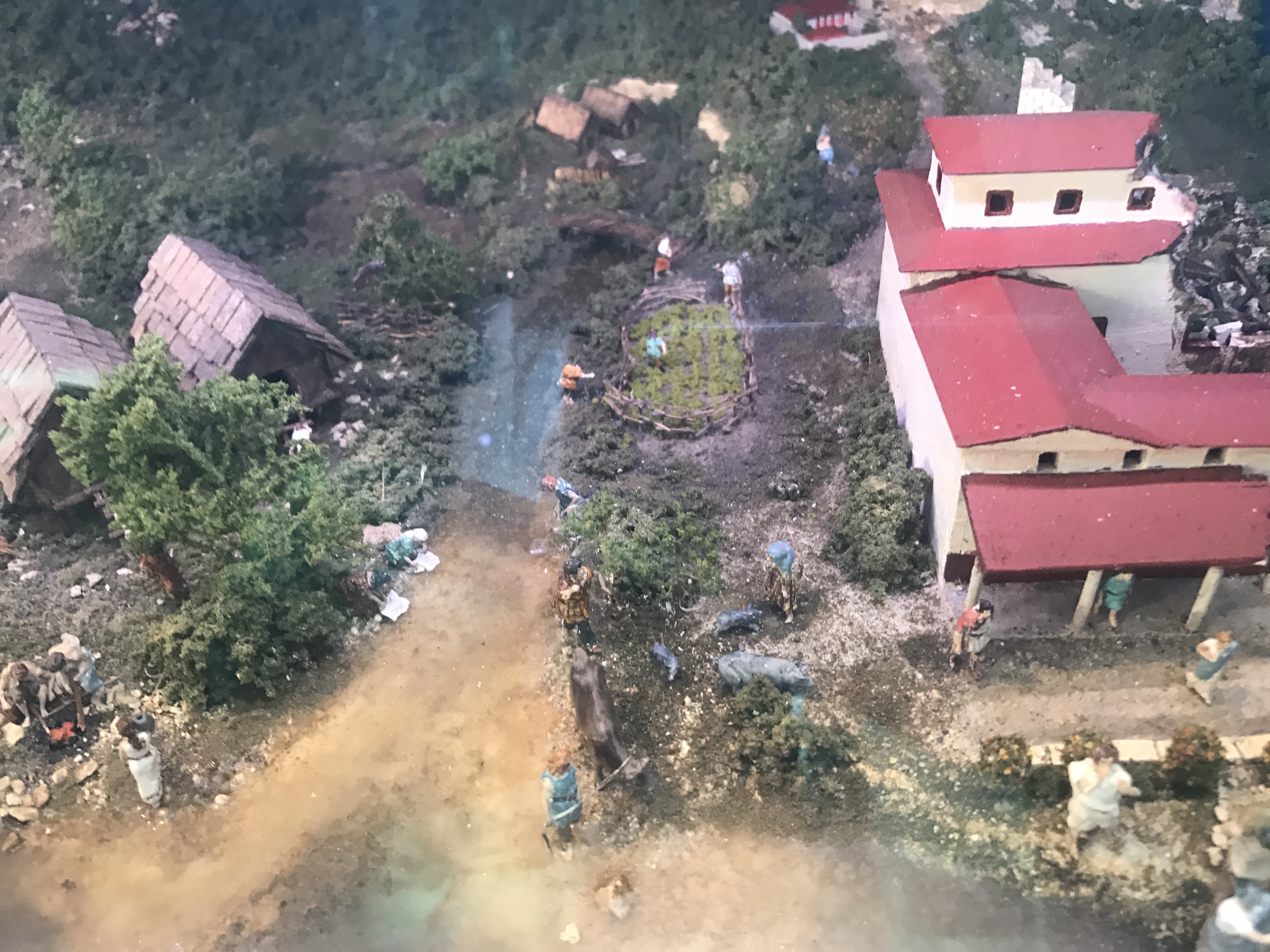
Reconstruction of the ruins of Lousonna in the C5th (in the Roman Museum).

In the C4th the town was partially abandoned and the inhabitants move to the defensible hilltop of medieval and modern Lausanne Cité.  There could be no clearer indication of the impact of the failure to secure the Empire’s border on the Rhine against barbarian raids in the C3rd and C4th.

Imperial Villa of Chiragan – Sculptures at Musée Saint Raymond Toulouse

IMG_2793
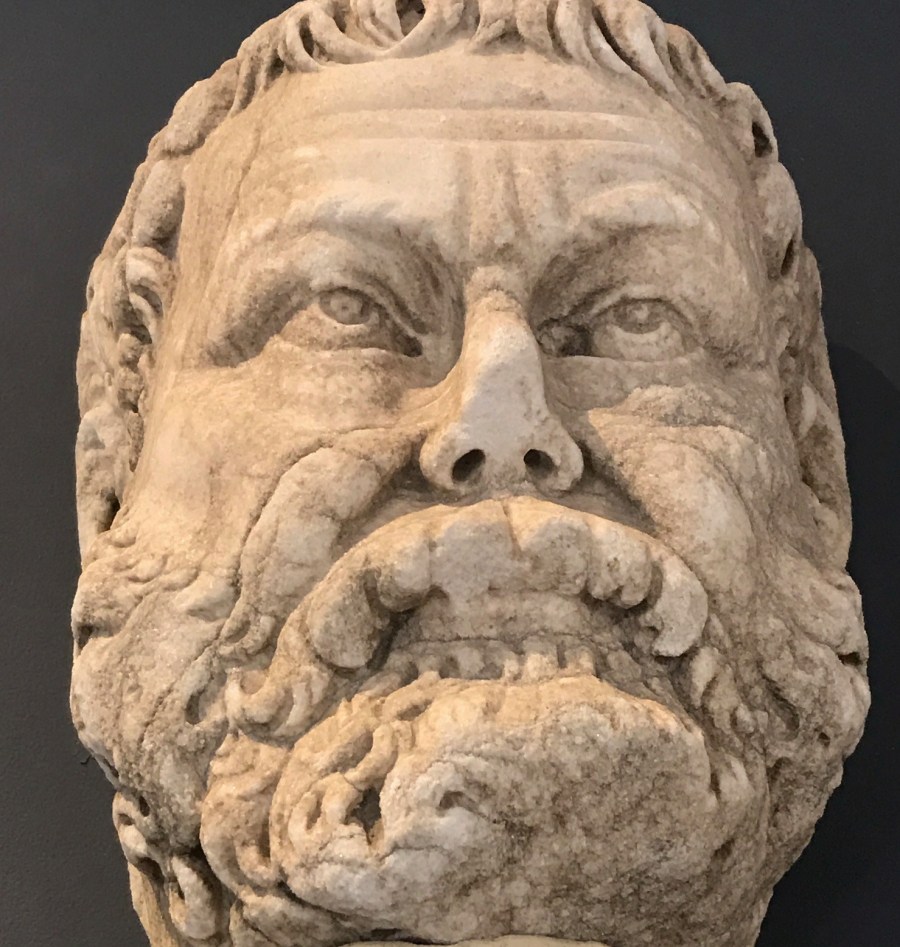
Portrait Bust of Augustus Maximianus

Overall Impact:               *** 3 stars – remarkable collection of sculptures BUT little context

Access                                **** 4 stars – in Musée Saint Raymond MSR with lifts

Atmosphere                      ** 2 stars – there could be so much more to say…

Other                                  ***** 5 stars – the artistry of the works is top quality!

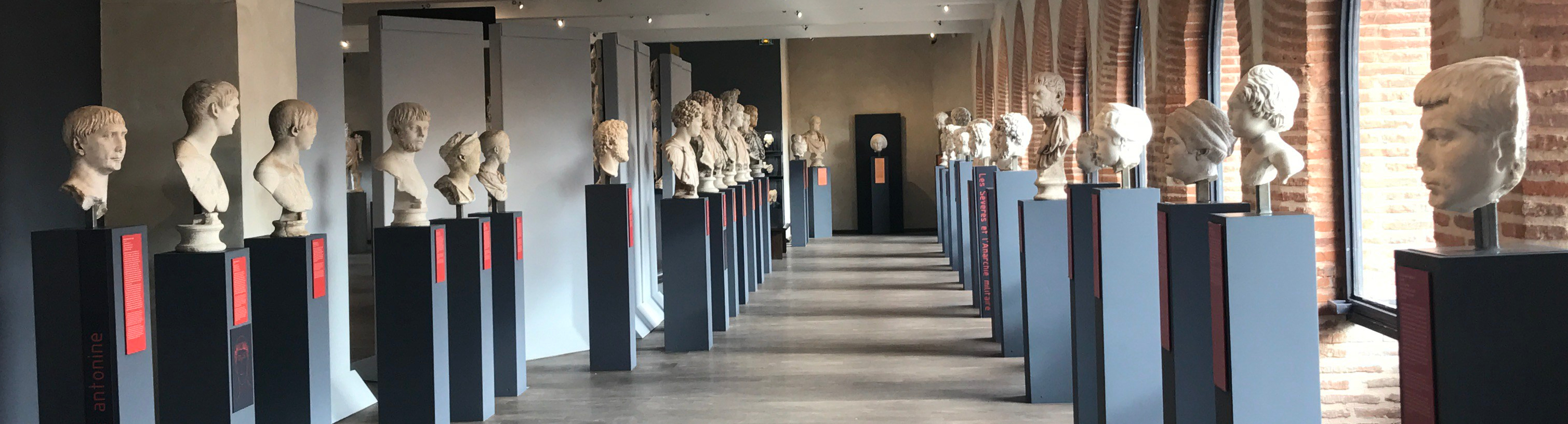
On the first floor of the Toulouse Archaeological Museum (le Musée Saint Raymond) are the remarkable remains from the Villa of Chiragan at Martres-Tolosane on the River Garonne, some 60kms south-west of Toulouse. The museum claims, with only a little exaggeration, that ‘the sculptures extracted from this site are exceptional. No other villa in Europe has yielded so many works in marble’.

img_2738.jpeg

Known of from the 17th Century, portrait busts of remarkable quality have been excavated. In 1826 the excavator wrote ‘every quarter of an hour I see a god, a goddess, an emperor come out of the bosom of the earth’. Many are recognisable imperial portraits while others have been interpreted as the procurators and administrators of the imperial domain of forests and quarries and of the imperial tolls and customs.

Excavations at the end of the 18th Century revealed a massive complex of buildings comprising both agricultural production with barns, stables and granaries, and a residence of over 200 rooms with a portico, baths and gardens. They cover 16 hectares in total!

Three broad phases of occupation have been identified. First, a modest villa from the time of Augustus with baths and a peristyle. Secondly, at the time of Trajan, an atrium and two peristyles are added. Finally, at the end of the Second Century, the villa reaches its largest extent and is occupied through to the reign of Arcadius and Honorius at the start of the Fifth Century.

The villa appears to have had a gallery where the portrait busts of Emperors from the First to Fourth Centuries were displayed. There were also many copies of famous Greek works of antiquity, of gods and goddesses, philosophers and satyrs.

The Labours of Hercules. To our mind the most exciting sculptures from the Villa of Chiragan are the reliefs of Hercules. They have been described as ‘baroque’ in style, which is anachronistic, but they are undeniably different from earlier classical statues. Given their scale and energy, they must have been extraordinarily arresting, especially since they were probably painted. It is thought that they were placed on a wall and separated by pilasters.

So what is this villa? It is clearly ‘Imperial’. The key clue seems to be in the largest central panel of the Labours of Hercules. Here we see Hercules killing Geryon, a giant who lived in Southern Spain, before stealing his cattle. The face of Hercules bears a striking resemblance to the portraits of Maximian, who Diocletian appointed in 286 as his fellow-Augustus of the West to share the burden of empire.

Curiously, the giant which Hercules/Maximian is subduing is depicted wearing a cuirass like a Roman general. Could this possibly allude to Maximian’s victories during his campaign against raiding Moors in 296 in Spain, before he crosses the Straits of Gibraltar and crushes the Berbers in 297-8? But the imagery surely makes better sense if it relates to Maximian and his Caesar Constantius crushing Roman usurpers such as the breakaway state of Carausius and Allectus in Britiannia?

IMG_2786
Hercules, who has the face of Maximian, defeating the 3 headed Giant Geryon who is clearly wearing Roman military gear and possibly represents the Usurpers defeated by Maximian and Diocletian as Augusti

Further credence is given to this identification by the strong association which Maximian had with the god Hercules and Diocletian with Jupiter – the premier Legiones Palatinae in the late Roman Army lists are the Ioviani and the Herculiani.

Also, there are portrait busts from Chiragan of Maximian and his wife Galeria Valeria Eutropia, and a youthful portrait of Maximian’s son Maxentius and his wife Valeria Maximilla. (Maxentius, who would have been 18 in 296, went on to be defeated at the Milvian Bridge by Constantine the Great in 312.)

So there must be a strong presumption that Maximian and his family stayed at Chiragan around 295-6 and had the Labours of Hercules carved for them. Maybe they also caused some other wonders to be built here in the foothills of the Pyrenees?


Introduction to Merida, Emerita Augusta

IMG_2288-1

Overall          6 ****** a must-see Roman Colonia with ‘one of everything’

Display         5 ***** informative bilingual display boards all around the City

Access           3 *** in a well laid-out archaeological park – parking is difficult

Atmosphere 6 ****** remarkable assemblage of Roman remains

Other             4 **** Merida has Spain’s Roman Museum (closed on Mondays of course!)

The Roman Colonia of Emerita Augusta was founded in 25 BCE by P. Carisius, legate of Augustus, for veteran soldiers (emeriti) from the bloody wars against the Cantabri in the north of the Iberian Peninsular.  The soldiers originally came from Legio V Alaudae and Legio X Gemina, and later from VI Victrix and VII Gemina.

Emerita guarded the principal crossing of the River Guardiana (Fl. Ana in Latin) and became the capital of the Roman Province of Lusitania.  The territorium of the Colonia stretched out as far as 100kms from the City.

The original settlement was probably a rectangle like a military camp, possibly with the surviving Arch of Trajan marking one of its gates.  Later, in the 3rd Century, a much larger city wall was built enclosing the amphitheatre and theatre in the north-east, to protect the City against the rampaging Franks and Alamanni who had by then broken into the Empire.

IMG_2374

Emerita contains a remarkable assemblage of Roman remains including a bridge of 57 arches over the Guardiana which carried the Roman road from Asturica Augusta in the north to Italica in the south. (See our separate post about the bridge.)

IMG_2347-1

IMG_2361

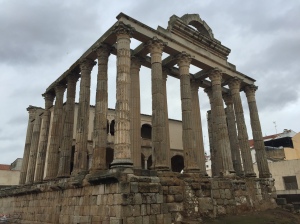
There are remains of the Forum and porticos, a Temple to Rome (wrongly called the Temple of Diana) adjacent to the Forum, and the remains of the Temple of Mars under the Church of Santa Eulalia in the west.

IMG_2315

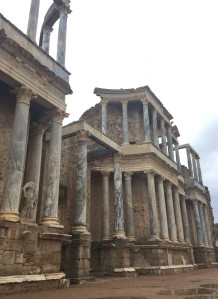
The most remarkable remains are the “entertainment quarter” in the north-east, containing arguably the best-preserved Theatre in the Roman World for refined entertainment, a large Amphitheatre for gladiatorial games, and a Circus for chariot racing.

Excavations at the Alcazabar (later Arab citadel) have revealed Roman streets and insulae inside a Roman wall, and remains of the Roman dyke that protected the river quality, an ancient forerunner of Bazalgette’s ‘interceptor sewer’ in London.

Emerita had a large population whose water consumption required advanced hydraulic systems fed by two large reservoirs, both of which are still in working order.  The Proserpina Reservoir could hold 8 million cubic metres of water.  Two aqueducts fed the town.

There is also a stunning Roman Archaeological Museum with the finds from Emerita, in a modern building made out of replica Roman brick. Sadly the museum was closed on our Monday visit to Merida (although we did see it years ago), so we will need to review it on a future occasion.

So why the very high score of 6 stars?  The Bridge, Amphitheatre and especially the Theatre are wonderfully preserved, they are well presented and there are enough other key Roman buildings preserved (temples, porticos and aquaducts) that it gives you a real feeling for what a major Roman Colonia was like.

Amphitheatre at Merida

IMG_2237

Overall          5 ***** well preserved large amphitheatre

Display         4 **** informative bilingual display boards

Access           3 *** well laid out archaeological park – parking difficult

Atmosphere 4 **** has the melancholy air of most Roman amphitheatres

Other             4 **** next door to Spain’s magificent Roman Museum

We don’t particularly like Amphitheatres, for the simple reason of what happened there and the brutal and bloody aspect of Roman ‘civilisation’ it forces you to confront.  (The feeling of ‘preserved misery’ in the passages under the Amphitheatre at El Djem in Tunisia was palpable for us.) However, you cannot escape them: no provincial capital worth the name could afford not to have its Amphitheatre and the one at Merida is magnificent.

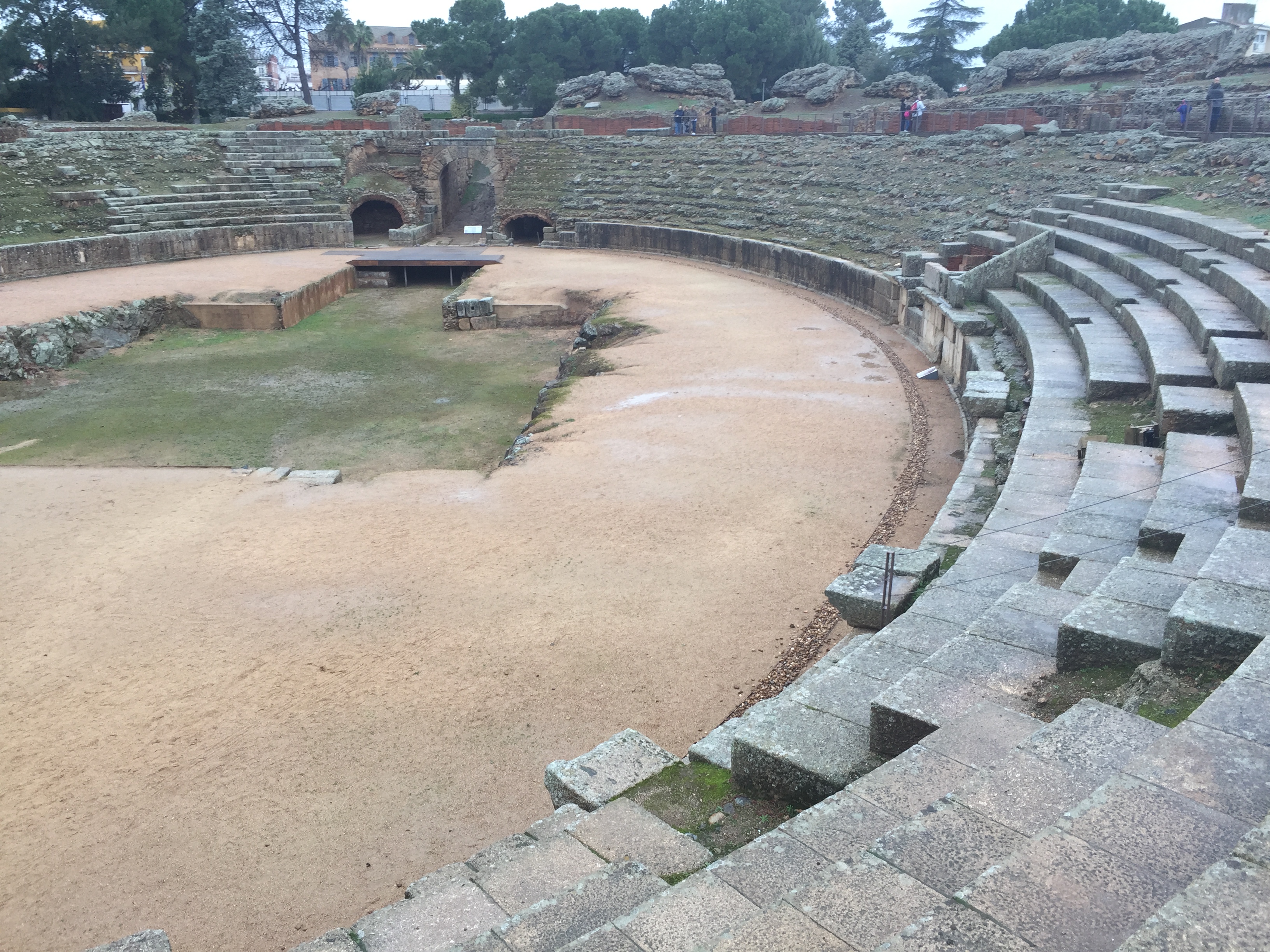
It formed of a large ellipse some 126m by 103m.  Crowd control was  as usual excellent, with 16 entrances, each of which accessed a stairway connecting the 32 vomitoria (entrance/exits) that opened onto the cavea (seating) for as many as 15,000 spectators.  There was a grandstand for local VIPs.  Clearly, as with Directors’ Boxes at the Emirates or the Etihad Stadiums, being visible in the best seats mattered in the  City’s social pecking order.

Inscriptions give the probable date of construction as 8 BCE, when Emerita Augusta was still only 16 years old and was expanding fast.  The emeriti – retired legionaries after whom the City is named – would no doubt have wanted their fill of games both to show their status and civilisation, and also for entertainment as in their ‘good old days under the eagles’.

Construction, like the Theatre next door, is of concrete and ashlars.  There is a fossa bestiaria (large pit) in the arena floor which was used for release of wild animals and other unpleasant surprises for the gladiators and victims of the games.

The Amphitheatre, as with all sites in Merida, has informative bilingual displays.  The more blood-thirsty in your party can learn that there were many different types of gladiator for the Roman ‘games enthusiast’ in addition to the retarii (net men) and the murmillones (full armour specialists).

The Amphitheatre is only part of a large well-displayed archaeological park in the north-east of the old city of Merida, complete with a world class Roman Museum devoted to Roman Spain.  There are some pretty good tapas bars and a brew pub opposite.  A ticket gives entrance to this zone and four other Roman sites.

Roman Legionary Fortress of II Augusta Exeter

IMG_1497

Overall          no stars  Very little to see – need to use your imagination

Display         1 *  Occasional tours of the sites are provided by tourist info

Access           1 *  Easy to walk round the streets but need to use your imagination

Atmosphere no stars  Hard to imagine what the fortress looked like

Other             no stars   If only the Lottery Bid to display the fine baths had come off!

In c55 CE the Roman invasion force established a Legionary Fortress for the Legio II Augusta.  It is usually thought that this legion had been active in conquering the South West Peninsula and the tribes of the Durotriges and Dumnonii, initially under the command of the future Emperor Vespasian.

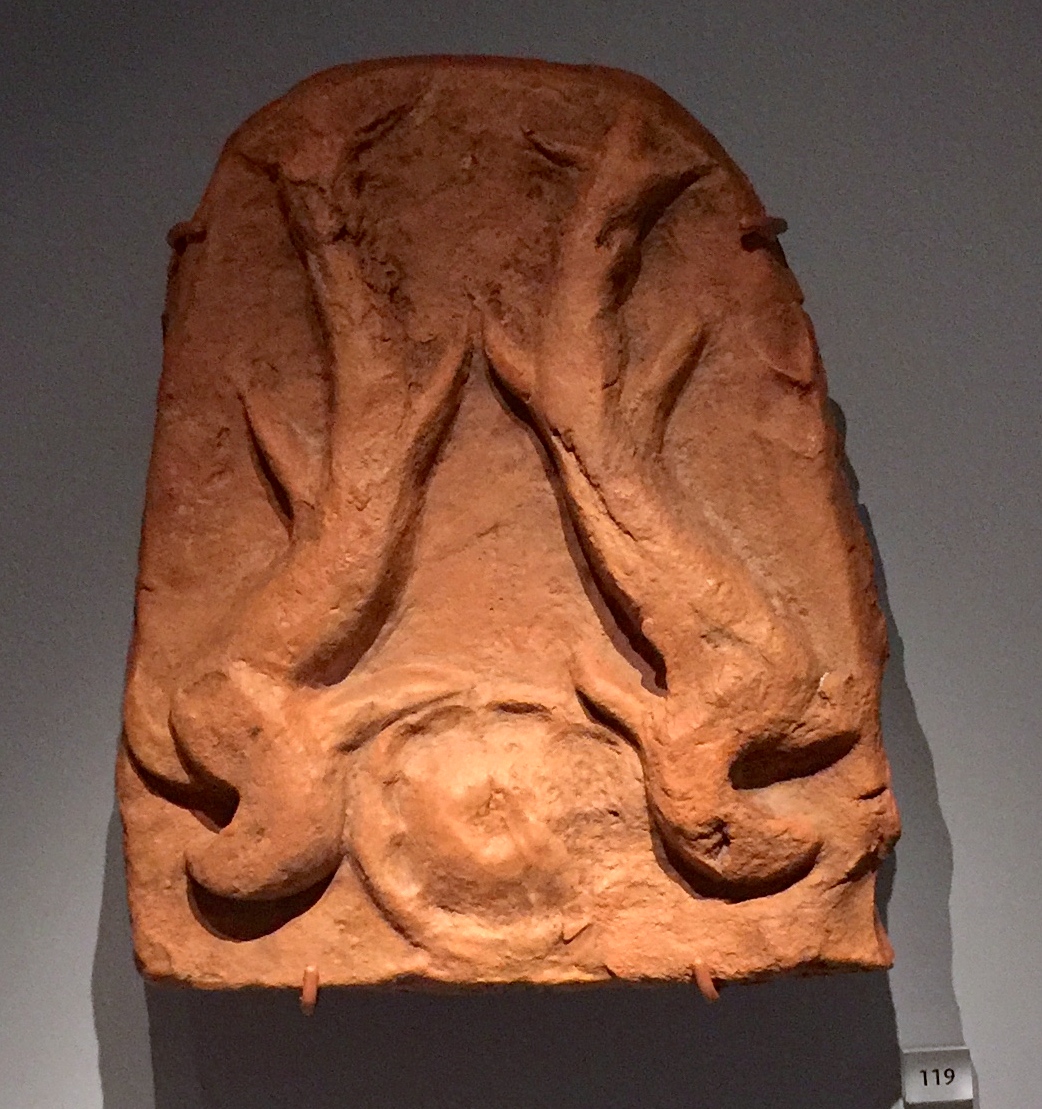
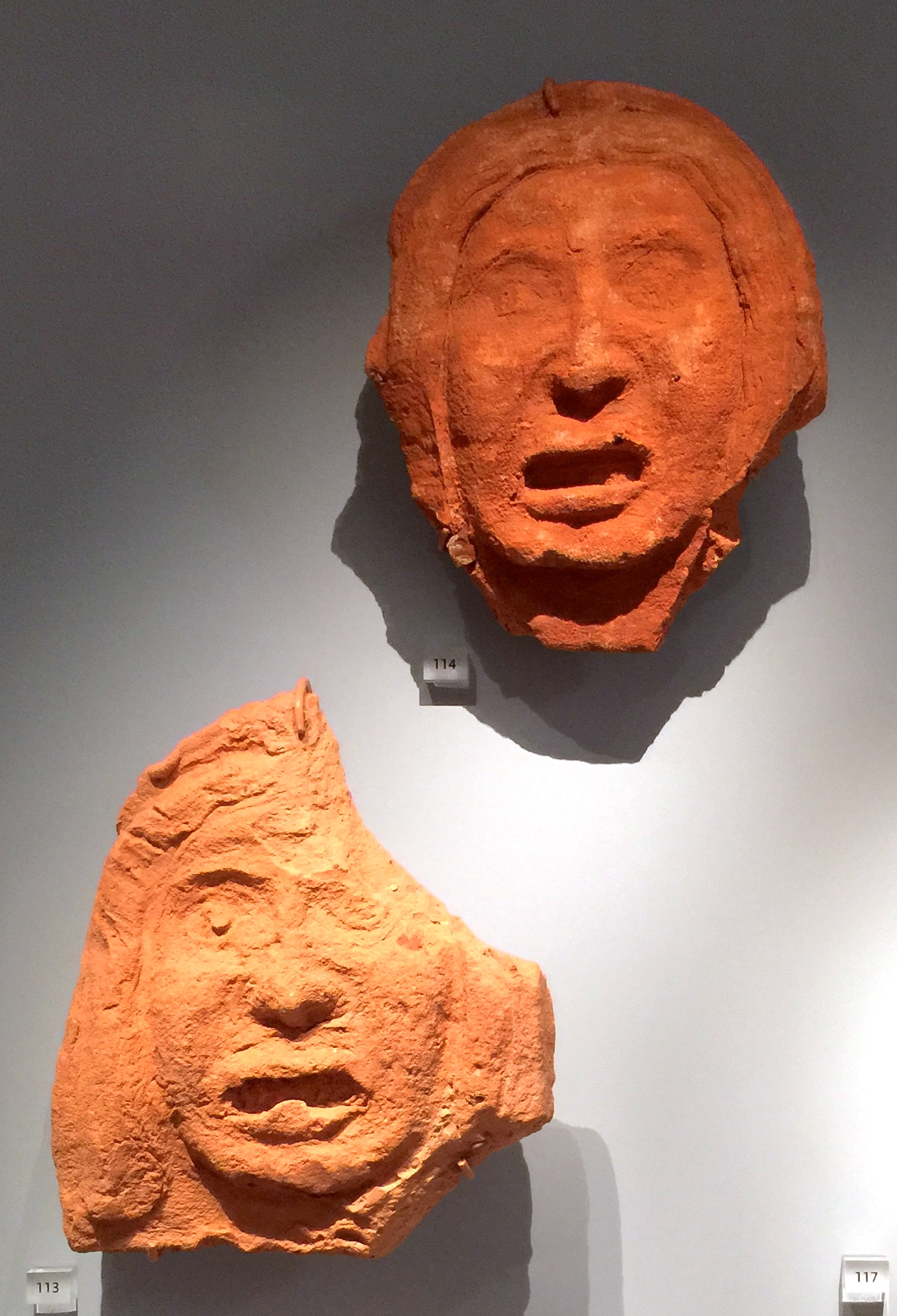
The II Augusta presence in Exeter is confirmed by a dolphin antefix from the baths, dated to about 60CE, made from the same mould as an antefix from Caerleon.

IMG_1484

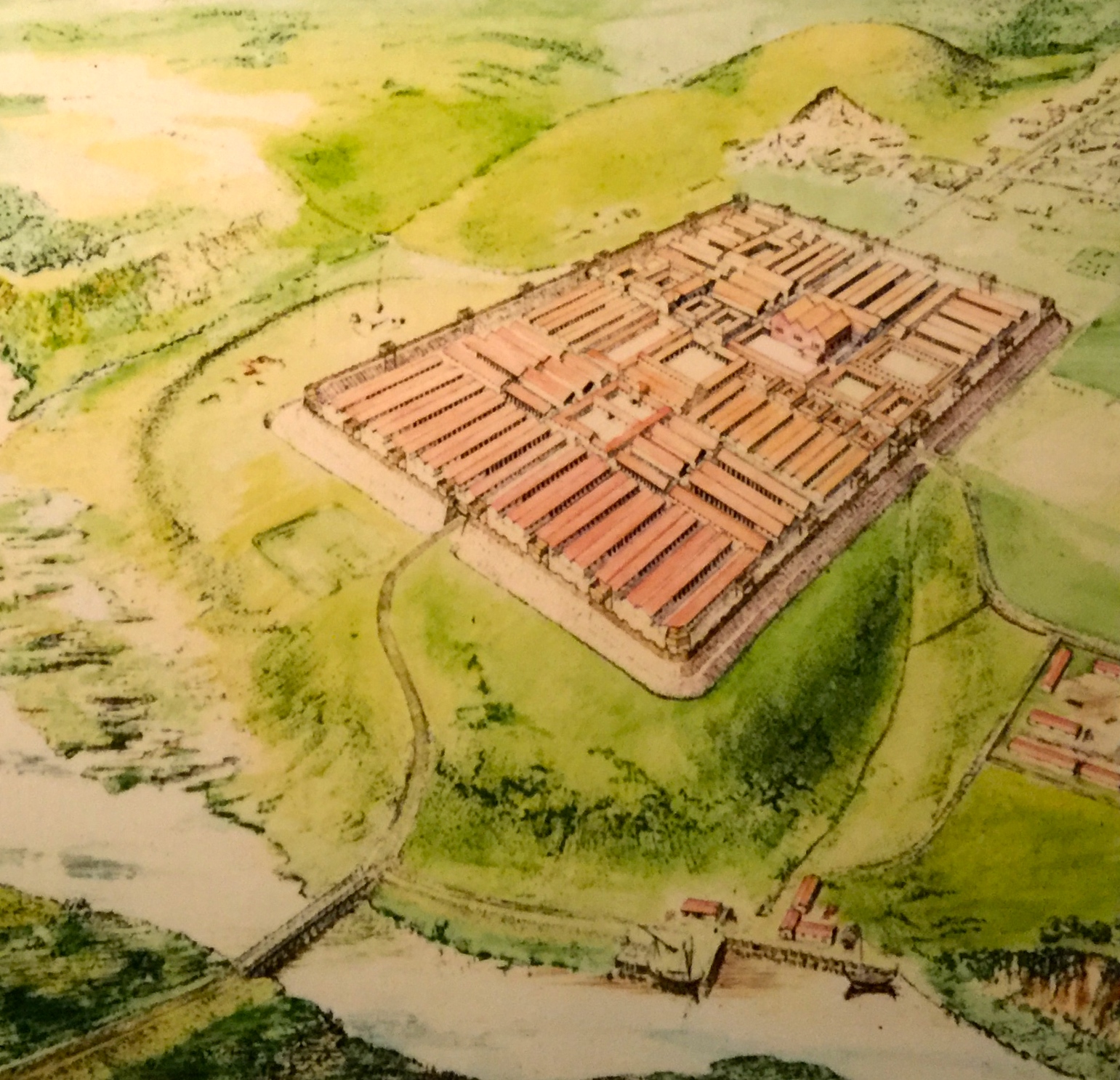
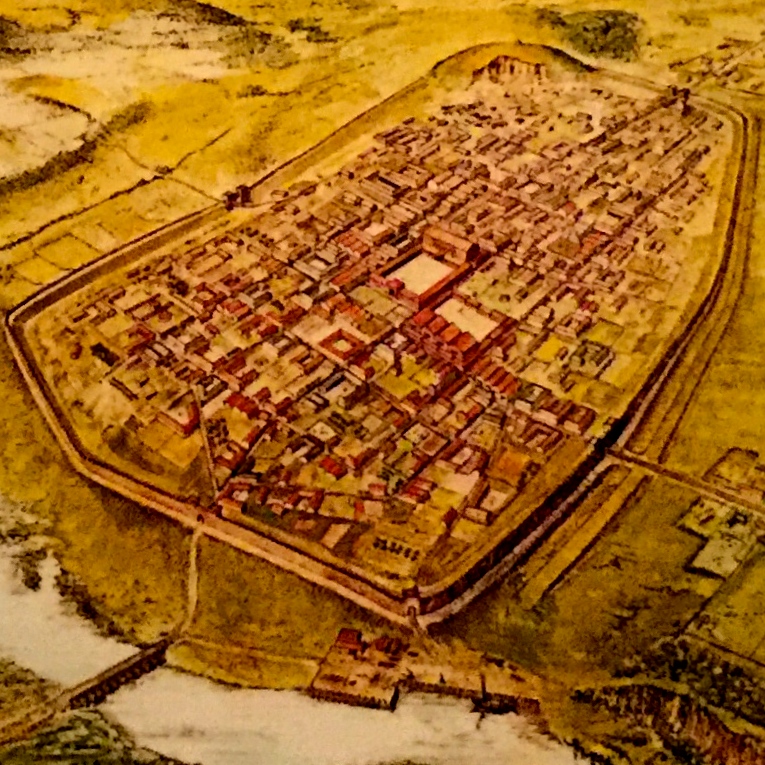
The fortress was 17ha (42 acres) in extent and the excavations that have taken place show it to have been a classic first Century playing card design with barracks, granaries and workshops built in timber.

The only stone building was a magnificent bath house, supplied by an aquaduct through the Porta Decumana.  The hot room (caldarium) and the warm room (tempidarium) have been excavated, and there was an exercise yard (palaestra) where a cockfighting pit has been found.  Alas the remains outside the West Door of the magnificent medieval Cathedral were covered over and a recent lottery bid to re-excavate and display them failed.

II Augusta remained at Isca Dumnoniarum for approximately 20 years, presumably pacifiying the Dumnonii, before departing for the Silurian front in South Wales, settling finally into another Isca (Caerleon).

IMG_1486IMG_1499


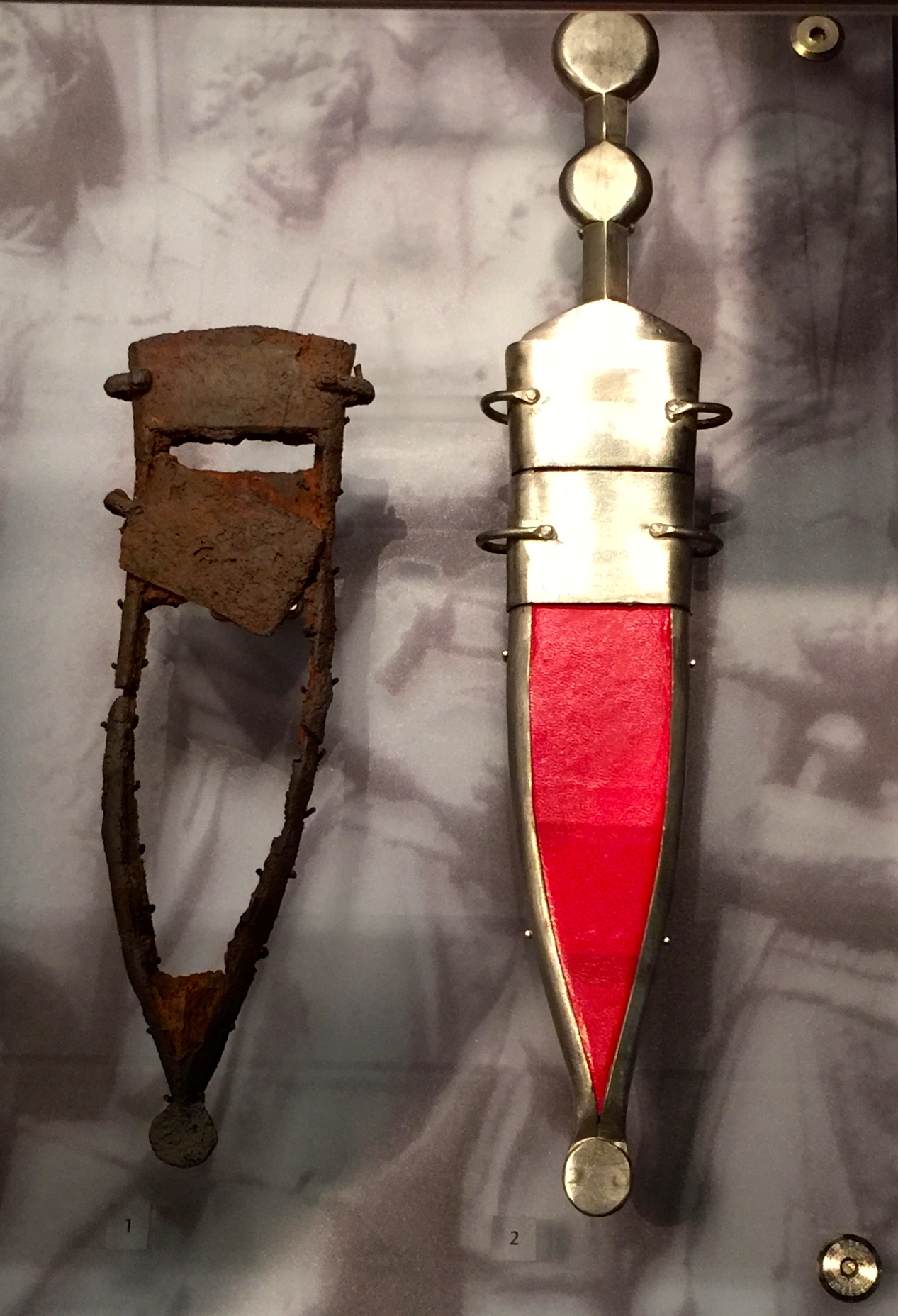
The above finds of a legionary dagger (pugio) and more carved antefixes from the bath roof are in the Exeter Museum RAMM.

The Legionary Fortress was connected to coastal shipping supply by subsidiary fort at Topsham on the River Exe Estuary.   There was a supply depot at St Loyes between Topsham and the Legionary Fortress.

In about 75CE, the Fortress appears to have been handed over to the civilian Civitas (self governing tribe) of the Dumnonii, in an apparently brilliantly successful example of turning hostile Celtic tribes into Romano-Britons – or at least transforming the tribal leadership.   A policy Tacitus set out clearly in his hagiographical biography of Britannia Governor Julius Agricola (77-85CE).  
In order, by a taste of pleasures, to reclaim the natives from that rude and unsettled state which prompted them to war, and reconcile them to quiet and tranquillity, he [Agricola] incited them, by private instigations and public encouragements, to erect temples, courts of justice, and dwelling-houses…..He was also attentive to provide a liberal education for the sons of their chieftains, preferring the natural genius of the Britons to the attainments of the Gauls; and his attempts were attended with such success, that they who lately disdained to make use of the Roman language, were now ambitious of becoming eloquent….At length they gradually deviated into a taste for those luxuries which stimulate to vice; porticos, and baths, and the elegancies of the table; and this, from their inexperience, they termed politeness, whilst, in reality, it constituted a part of their slavery.
Tacitus, Agricola 21
The stone built legionary baths were presumably too luxurious for the civilian Civitas and were demolished.

Roman Civitas Walls, Exeter

IMG_1503

Overall          1 * the lower courses survive in some sections

Display         2 ** good wall walk published by Council covering all periods

Access           4 **** easy throughout the entire length on streets and parks

Atmosphere 2 ** you can get start to get a feel for the shape of the Isca Dumnoniorum

Isca Dumnoniorum inherited the site and presumably many of the buildings of the former Legionary Fortress of II Augusta, when the legion vacated the site in c75CE.

In Ptolemy’s Geographia of the 2nd Century Isca – which means ‘water’ in Celtic – is one of the four ‘cities’ of the Dumnonii, and is also the termination of one of the routes of the Antonine Itinerary.

IMG_1528

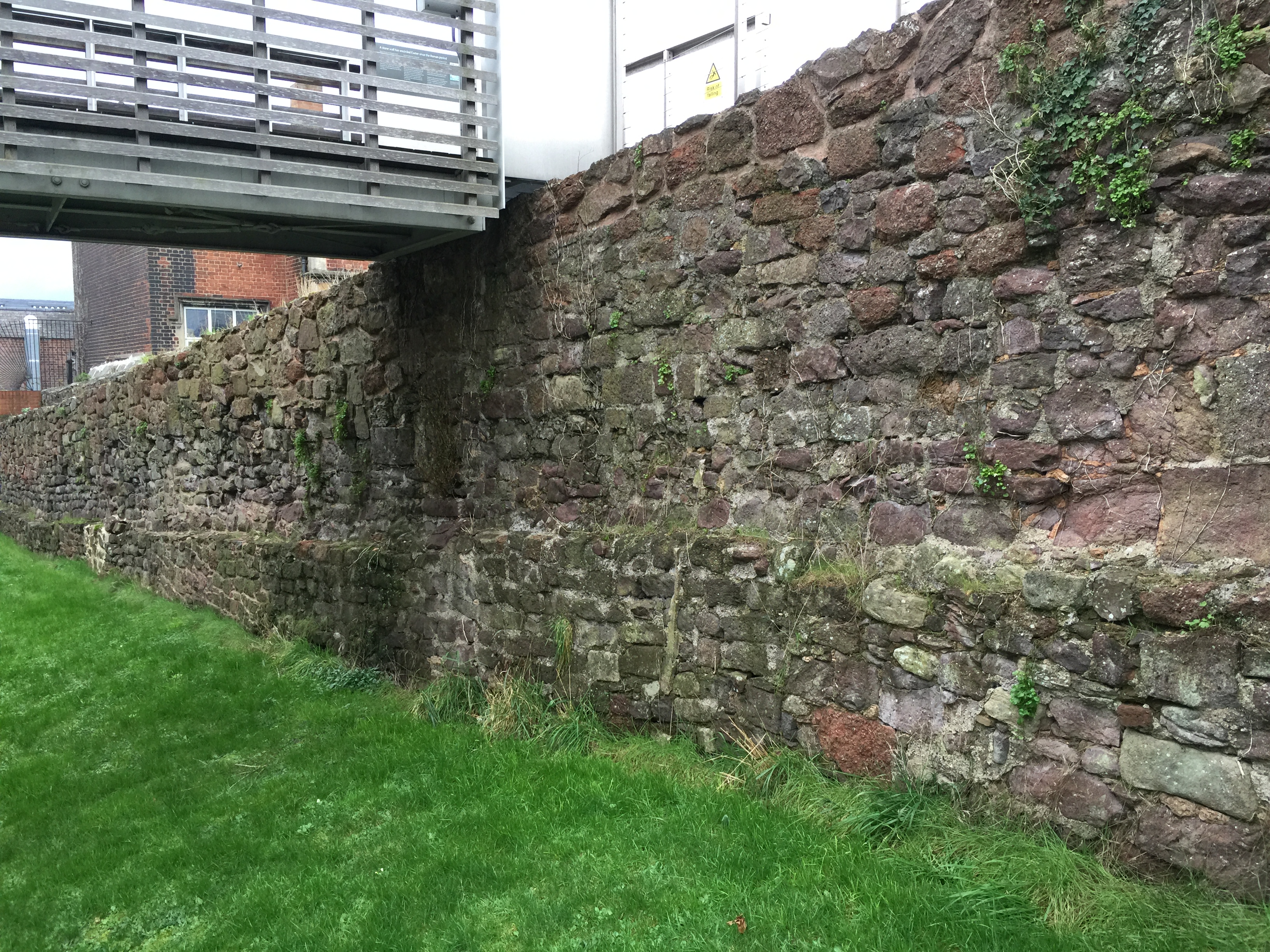
The Civitas capital of the Dumnonii was twice as large than the preceding Legionary Fortess of 17ha and was enclosed by a ditch and rampart enclosing 37ha (92 acres).   In the late 2nd Century a stone wall was constructed.  The circuit of stone defensive walls is on the Roman foundations but has successively been rebuilt and raised by Saxons, Normans, Plantagenets and in the Civil War. The layers of wall can be clearly seen in the Northenhay section above.  The Roman layers are the squared grey volcanic ‘trap’ at the bottom.  The Alfredian section is the white stone above.  Further examples from the same sector are below.

IMG_1525IMG_1521


Not much of Isca has been discovered in excavations and there is even less to see.  There was a civilian bath house and there is evidence of copper and bronze working. A possible stock-yard has also been identified.

Many coins have been discovered from the early 4th Century but hardly any later than 380, suggesting that at least its role as a regional market centre ended several decades before the end of central Roman rule.   

London’s Amphitheatre

Overall          2 **   Only foundations and drains survive

Display         5 *****  Brilliant trompe l’oeil display, v.g. guide book

Access           5 *****  Free and accessible in underneath Guildhall Art Gallery

Atmosphere 3 ***   You can get a real feeling for what it looked like

Other             4 **** A key discovery for Londonium as provincial capital

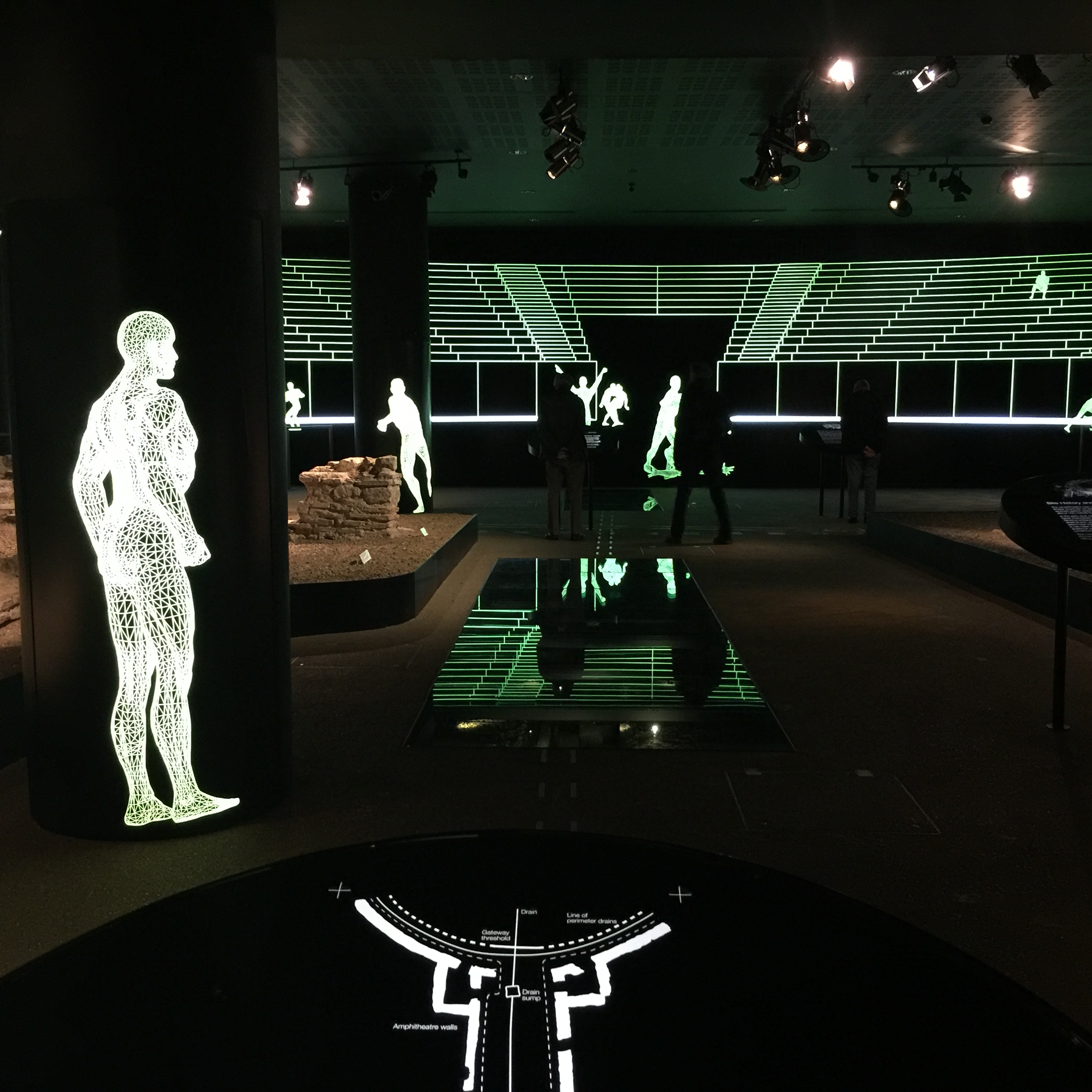
The amphitheatre of Londinium, the capital of the Province of Britannia, was discovered relatively recently in 1988, and opened amidst much gladiatorial hoopla in 2002.  The entrance is from the basement of the new Guildhall Art Museum into an underground gallery beneath the plaza in front of the Guildhall.

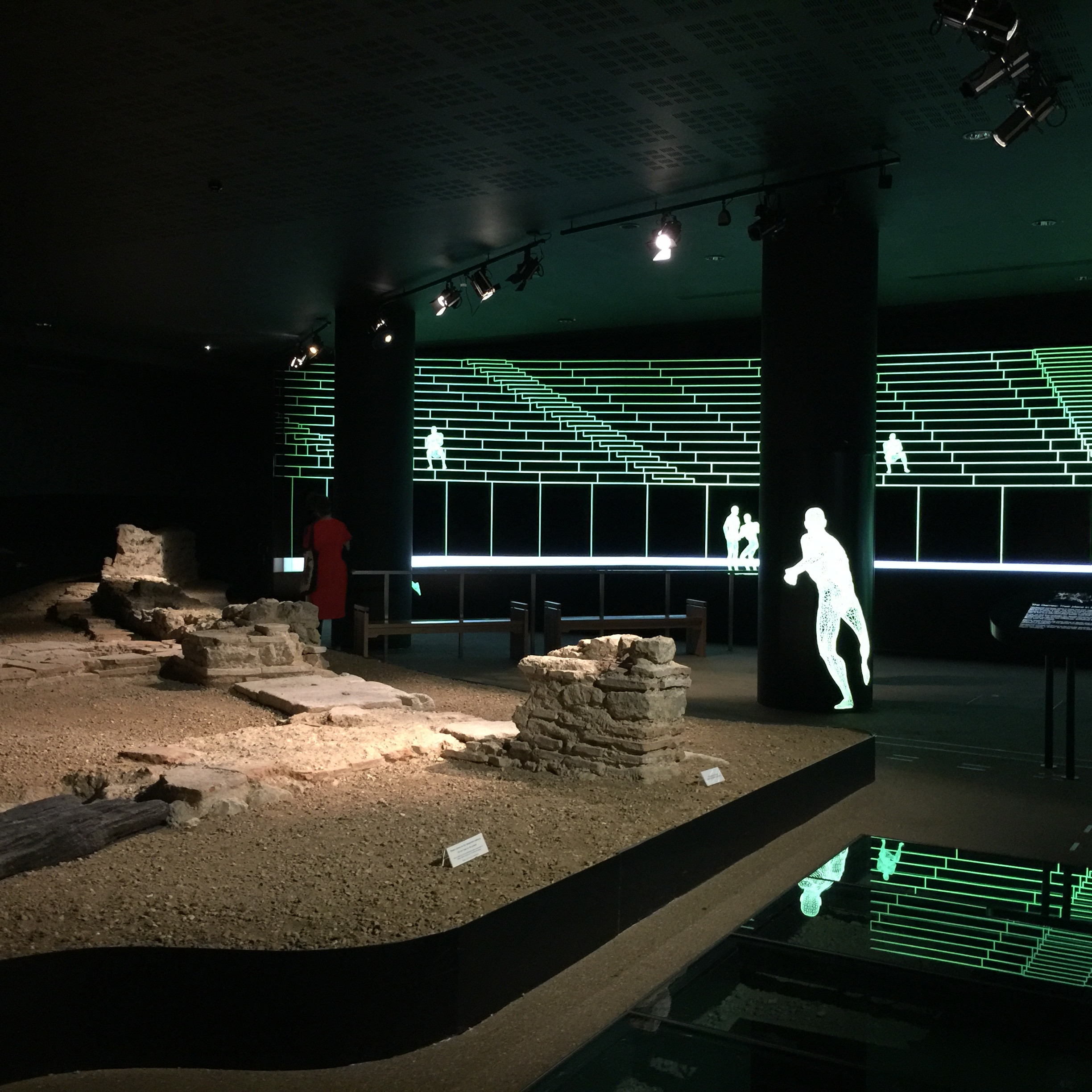
The east gate and adjoining walls are on display, with a stunning backdrop of fluorescent green to represent the seating tiers and human figures suggested by geometrical surfaces – very modern but it works well!

IMG_1137

The first amphitheatre was constructed in AD 74 and built of wood.  It was about the size of Wembley Stadium and seated nearly 7,000 spectators, it is calculated.  Around AD 120 and the visit of that Imperial Improver Hadrian, the amphitheatre was expanded with ragstone walls 2.5m high around the arena and additional seating up to accommodate, it is suggested, some 10,500 spectators.  That’s two Royal Albert Halls!

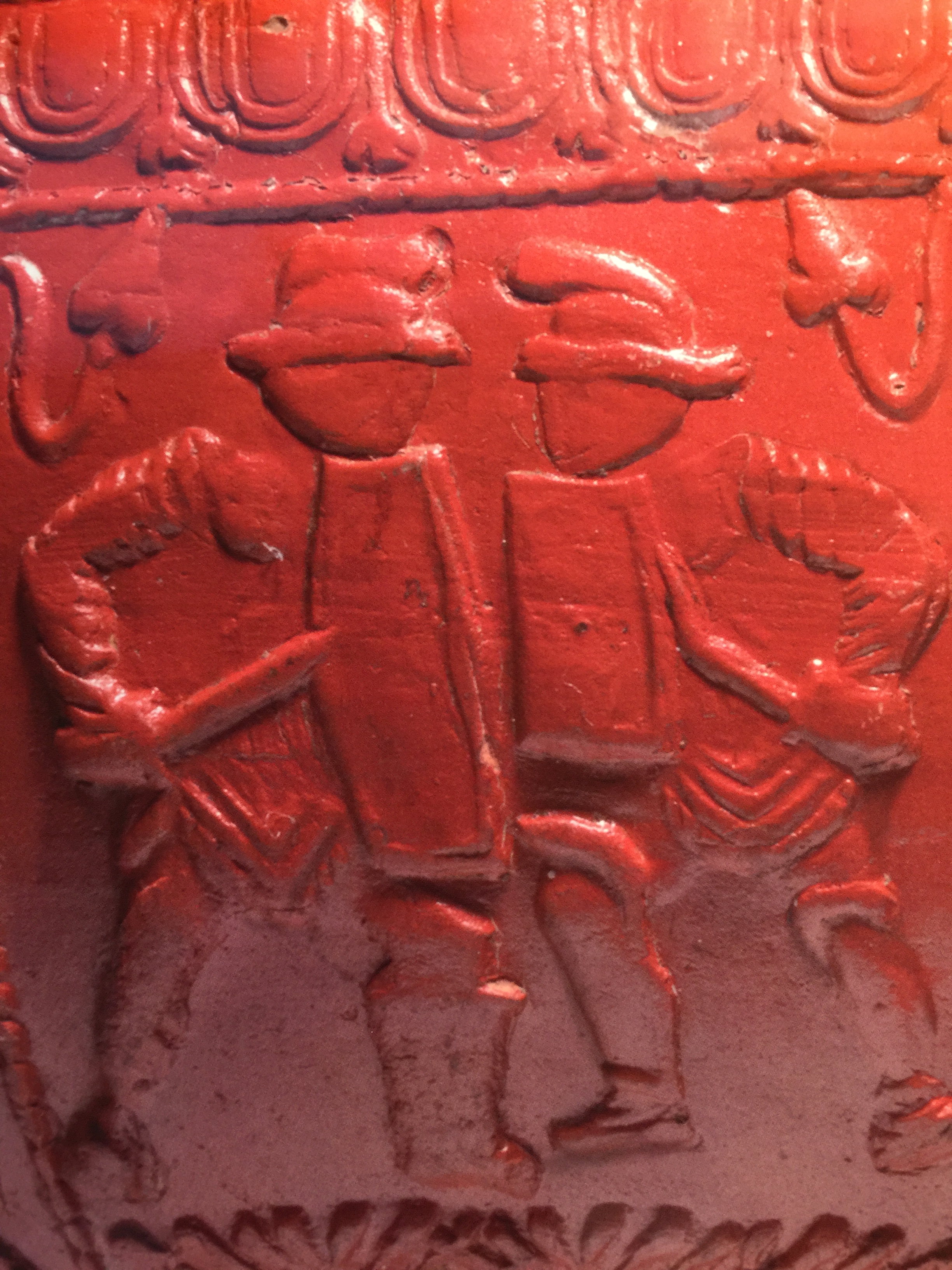
The walls on the arena were covered in pink plaster and costly imported marbles have been found, no doubt for the VIP boxes.  A large quantity of Samian ware was also found, some of it official souvenirs with gladiators fighting, and other fine dining ware.  Apparently, those putting on the games could dine with the gladiators – a grisly Roman twist on the corporate box at Wembley!

IMG_1154

Magnificent jointed woodwork of drains and entrances has survived in the wet conditions, shedding light on Roman woodworking techniques.  Many coins, hair pins and even a gold necklace were found, so clearly women were in the audiences.

The amphitheatre fell into disuse in the second half of the fourth century.

We can but speculate on the scenes it saw of gladiator fights and exotic animal ‘hunts’, of executions and martyrdoms.

There is an excellent guidebook in the bookshop which sets out the context of the amphitheatre within Roman London, Roman Britain and other amphitheatres in the Empire.

This site is a tough one to rate since there is actually not that much preserved, although what there is is interesting, especially the wooden drain.  The display is excellent.

IMG_1142

Gallo-Roman Museum Saint-Romain-en-Gal, Vienne

IMG_9509IMG_9493

Overall          *** 3 stars – remarkable mosaics

Display         5  artefacts displayed as works of art, models exceptional

Access           4 large car park with underpass to Museum

Other             Museum almost overwhelms the exhibits!

Vienne was originally the capital (oppidum) of the civitas of the Allobroges, which stretched from the Rhone at Vienne to Lake Geneva.

This is a massive modern museum opened in 1996.  It displays the finds from ancient Vienne in a spare and light modern manner.  We saw it the day after the Museum in Lyon at Fouvière and although the permanent collection here contains some stunning exhibits – the mosaics stand out and are beautifully displayed, it is not quite its equal.

Outside there are the remains of the suburb of Roman Vienne, where the houses of wealthy citizens lined the road next to the palatial baths and exercise ground net to the Rhone.  There is a workshop for the mosaic restorers and a space of temporary exhibitions in a second building, which forms the entrance.IMG_9499

IMG_9477

Vienna became a Roman colony in 47 BCE under Caesar and was in the old Transapline Gaul – Provincia.  Herod Archaelaus was exiled here in 6 CE.  In the later Empire it became the place of collection of the annona or tax in kind from the Gauls.  As a result there are remains of massive warehouses lining the Rhone where the taxes were assembled before being transported to Rome.  These are displayed by a series of model reconstructions.

Perhaps as a result of this role, Vienne (Vienna) became the capital of the late Roman Diocese of Vienensis, at last equalling its rival just up the Rhone at Lyon.

Again as an inhabitant of Britannia you are left wondering at the wealth and display of the Gauls compared to our off-shore island!

When we visited there was a Roman festival of re-enactors in progress, one of several events staged each year at the Museum.  French re-enactment groups dressed appropriately lived like free-Gauls and Roman soldiers – sensibly kept well apart here.  Also various groups re-constructed ancient wine and beer making, medicinal herb preparation, Celtic and Gallo-Roman cuisine.  The tasting measures were alas depressingly small, although the re-enactments were impressive!

IMG_9463

Gallo Roman Museum of Lyon

IMG_9321

Overall Rating      ****    4 stars – stunning unique exhibits

Display                   *****  5 – thematic, amazing building, bilingual

Access                     ***      3 – easy parking, buses from central Lyon

Other                       Wow Factor!

This is one of the best Provincial Museums you can find in the Empire.  Some of the objects took our breath away.

It brings together Roman finds from the Midi of France on the now familiar thematic basis, but when opened in 1975 ground breaking.  The building is brilliantly designed by Bernard Zehrfuss to fit into the hill alongside the Fouvière Theatres, and opened by President Giscard d’Estaing.

Colonia Copia Claudia Augusta Lugdunum was founded in 43 BCE by Lucius Munatius Plancus, it was the capital of Gallia Lugdunensis, the seat of the Sanctuary of the Three Gauls and the second most important city in the West – after Rome, with its own urban cohort and a population estimated at 50-100,000.  Both Claudius and Caracalla were born there.

You enter the Museum from the top and walk down a winding path, starting with inscriptions, moving through temples, domestic houses, trade and so forth.  There are some of the best exhibits you could find ranging from

  • a stunning ceremonial bronze age cart from 6th BCE,
  • fragments of the Altar to Augustus and Rome from the Sanctuary of the Three Gauls
  • the longest written inscription in Gallic – the Coligny Calendar (!),
  • Claudius’ speech on a large bronze tablet in AD 48 before the Roman Senate granting Gauls entry to the Senate,
  • silver statuettes buried during the 2nd CE Germanic invasions and
  • top rate mosaics like the Bacchus Mosiac from Lugdunum (Lyon) and the surrounding cities.

IMG_9327IMG_9314

These are just a few of the treasures.  There are numerous excellent models of temple precincts, city insulae, how the scene-lifting gear worked at the theatre and so forth.  There is a relief model of the surrounding area at the start, which by use of light projections orientates the visitor on when Lugdunum was founded by and then developed over the next 4 centuries.

There are bilingual French and English labels which is helpful and a well produced souvenir guide.

If we had to find a criticism it would be there is not enough on the later history and decline of Roman Lugdunum.  The overall impression is of the immense material wealth and artistic culture of the Capital of the Three Gauls.  Not to be missed!

IMG_9293