Italica near Seville

Overall Impact:                **** 4 stars – Italica delivers a mixed impression with a massive amphitheatre and high quality mosaics – but hard to understand as a major City.

Access                                *** 3 stars – road access to site entrance

Atmosphere                      ** 2 star – Italica is a site that is hard to make sense, although with star elements

Other                                  **** 4 stars – birth-place of 3 Emperors!

Italica should impress more, it is after all the birthplace of two of unquestionably the most important Roman Emperors – Trajan and Hadrian in the 2nd Century CE, and possibly a third Theodosius I of Great in the 4th Century.

It has the third largest amphitheatre in the Empire, and some remarkable mosaics – including a very witty Neptune with putti hunting  crocodiles and fighting cranes and a delightful one with bird pictures.  What is more when we were there after a very rainy winter day, the sewer system still appears to function.

The Seahorse mosaic in one of the mansions in Italica.

Perhaps it’s the contrast with the altogether amazing Merida which we had just visited the day before, that seems to put Italica in the shade?  Maybe the restored walls and portico pillars that line Hadrian’s wide avenues in the New Town, are just too neatly finished?  Maybe its the worry induced by at least three world class mosaics being open to all the elements has to throw at them?

Italica was founded as far back as 206 BCE by the great general Publius Cornelius Scipio, later called Africanus after he defeated Hannibal at Zama.  His great victory over Hannibal’s brother Hasdrubal at Ilipa was just up the road and Scipio settle his veterans from Italia, in Italica to dominate the areas around the River Guadalquivir.

The ‘Birds’ Mosaic at Italica.

Scipio’s Old Town lies under the modern Santaponce.  Trajan was born in Italica on 18 September 53 CE in Italica in a non patrician family of Italian and possibly Iberian origin.  Hadrian was born in Italica on 24 January 76 CE and was the adopted heir of the childless Trajan, who was the maternal cousin of Hadrian’s father.

The substantial remains of the Amphitheatre at Italica, which with CGI additions was used as a set for Game of Thrones.

Hadrian expanded Italica northwards with the New City, and made it a Colonia Aelia Augusta Italica.  He added temples including a meassinve Trajaneum and built the amphitheatre that could seat 25,000 spectators – half the Colisseum itself.  This was both a bold statement and a massive financial commitment to funding Games and Spectacles by the local elite of Italica.  Large well appointed houses were built for this elite in the City.

It is therefore perhaps not surprising that Italica’s prosperity shrunk with the end of the Antonine Dynasty with which it was so closely connected.  Also the River Gaudalquivir had shifted course and silted up, which favoured Hispalis (modern Seville).

General Views across Italica.

Italica carried on in a reduced state like a dowager fallen on hard times.  It was used as a stone quarry by Moors and Christian regimes alike.  Today it has some monuments like the Amphitheatre, but not much extraordinary to excite the visitor, except it’s general size and the memories of Trajan and Hadrian.

Italica in Summary

Italica is a large and sprawling site. The Amphitheatre is massive and impressive. The rest of the site has striking mosaics but how they fit in the houses is difficult to understand. The overall picture of how the City functioned is hard to fathom.

Maison Carée, Nîmes

Overall Impact:               ******6 stars – one of best preserved/restored Roman buildings

Access                                ****4 star – public square open 24/7 but parking in old town hard

Atmosphere                      *******7 stars – almost off the scale, especially now it’s cleaned

Other                                  **2 stars – alas, nothing Roman in heavily restored interior

IMG_3319

Almost unbelievably, as devoted fans of Roman architecture and remains (being the sort of people who will travel many miles to look some bumps in a field and see in our mind’s eye just what that Auxiliary Fort must have looked like), we had never been to see the Roman Sites of Provence (Provincia) until this New Year.

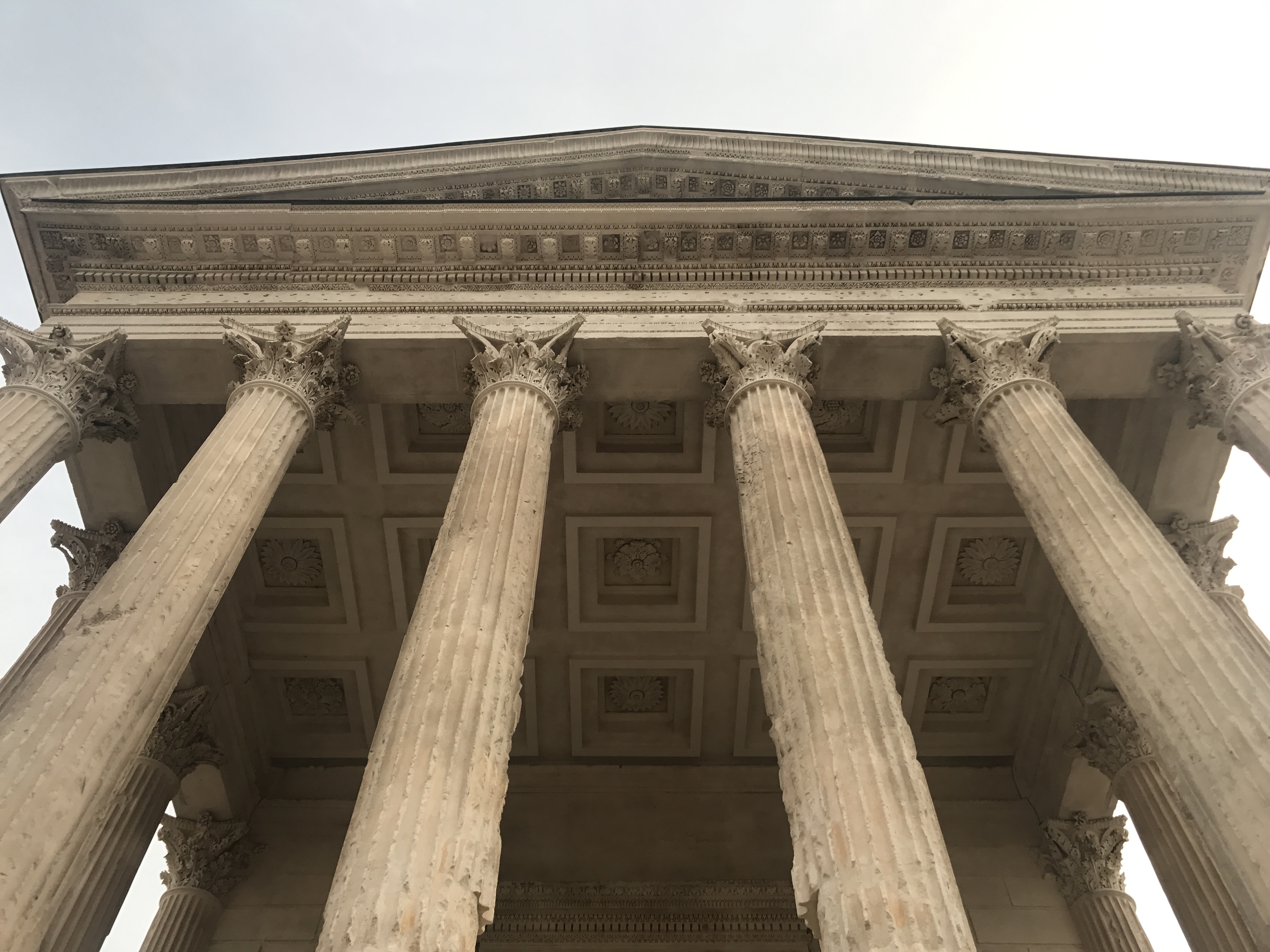
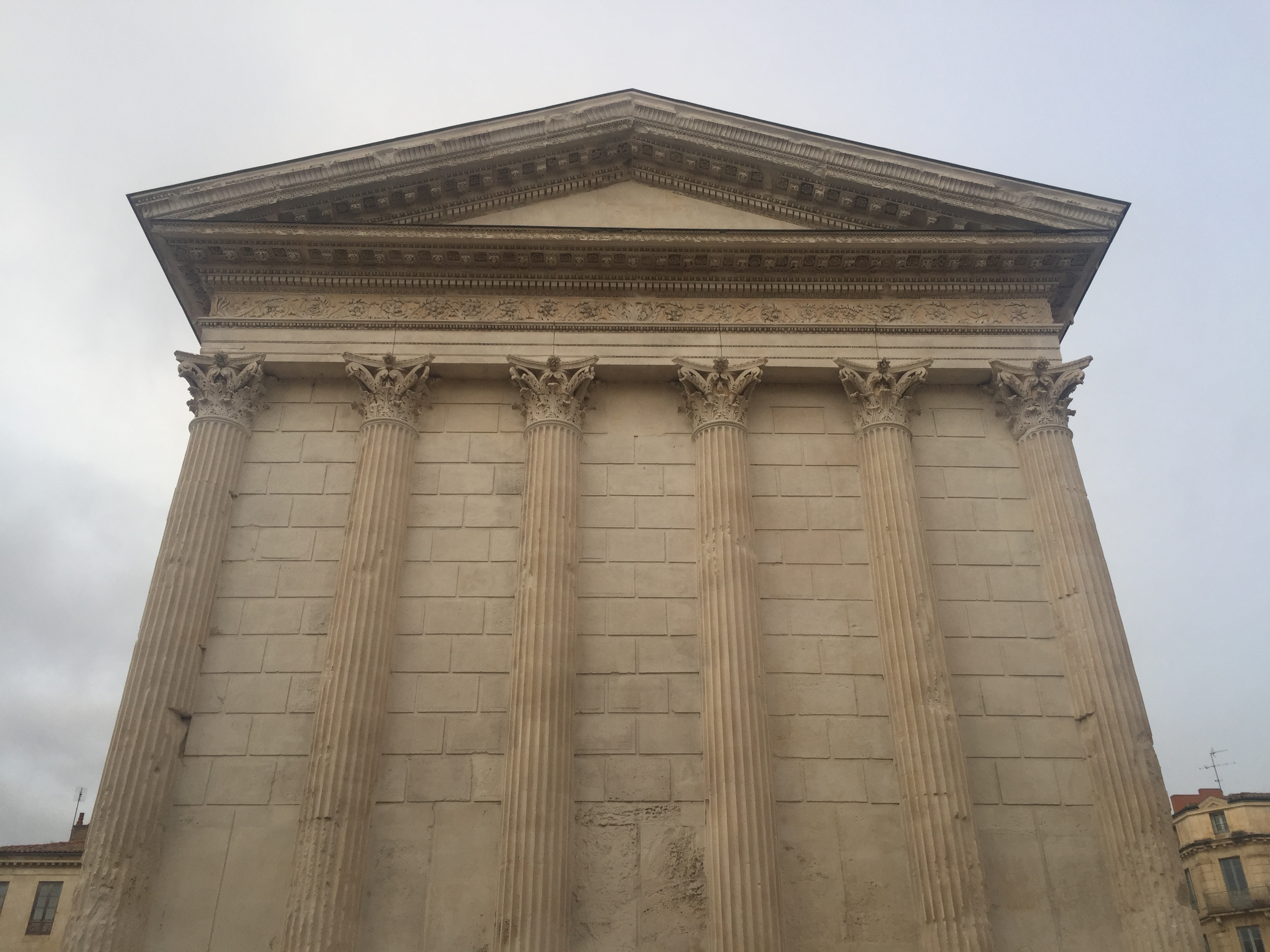
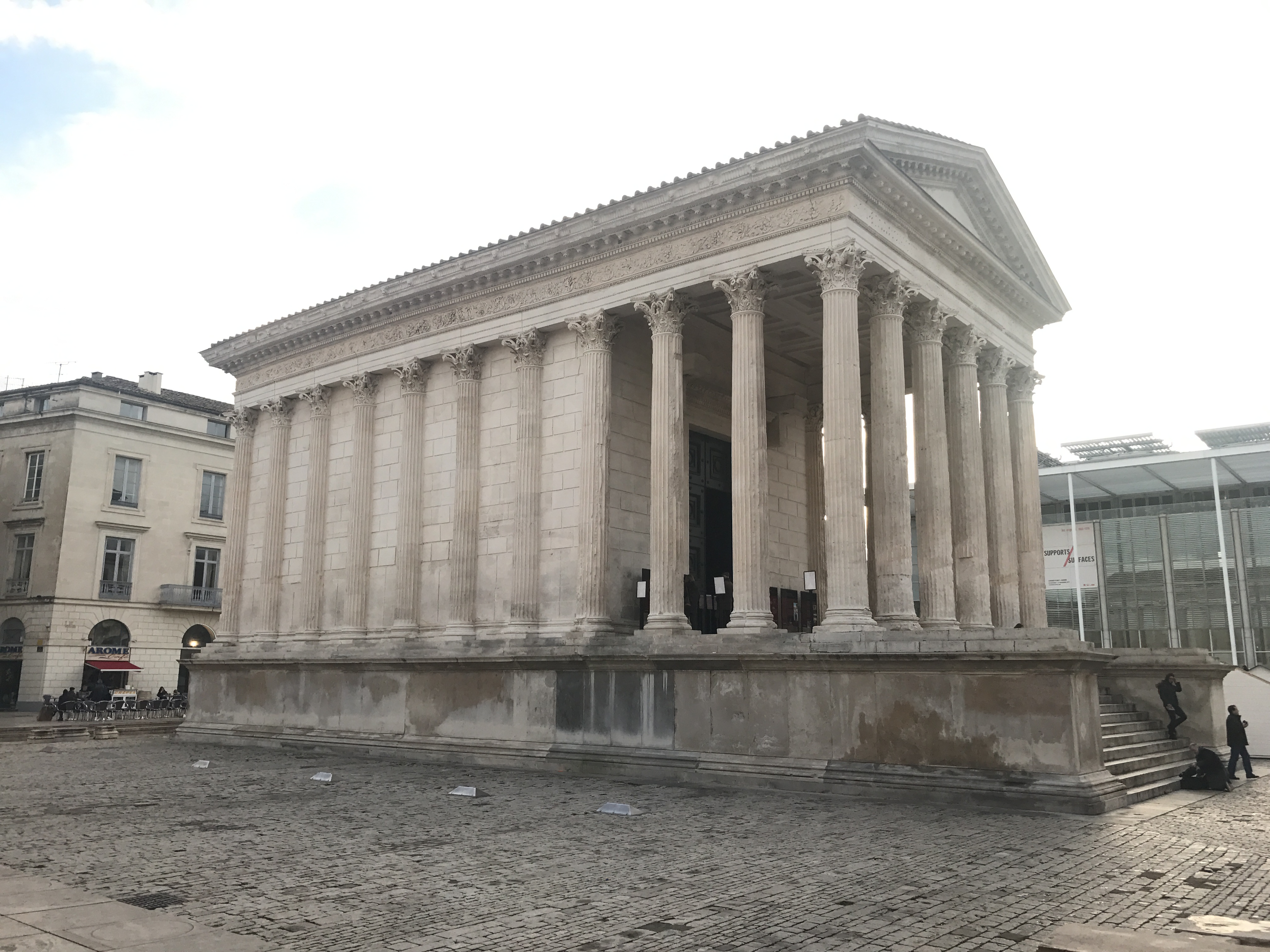
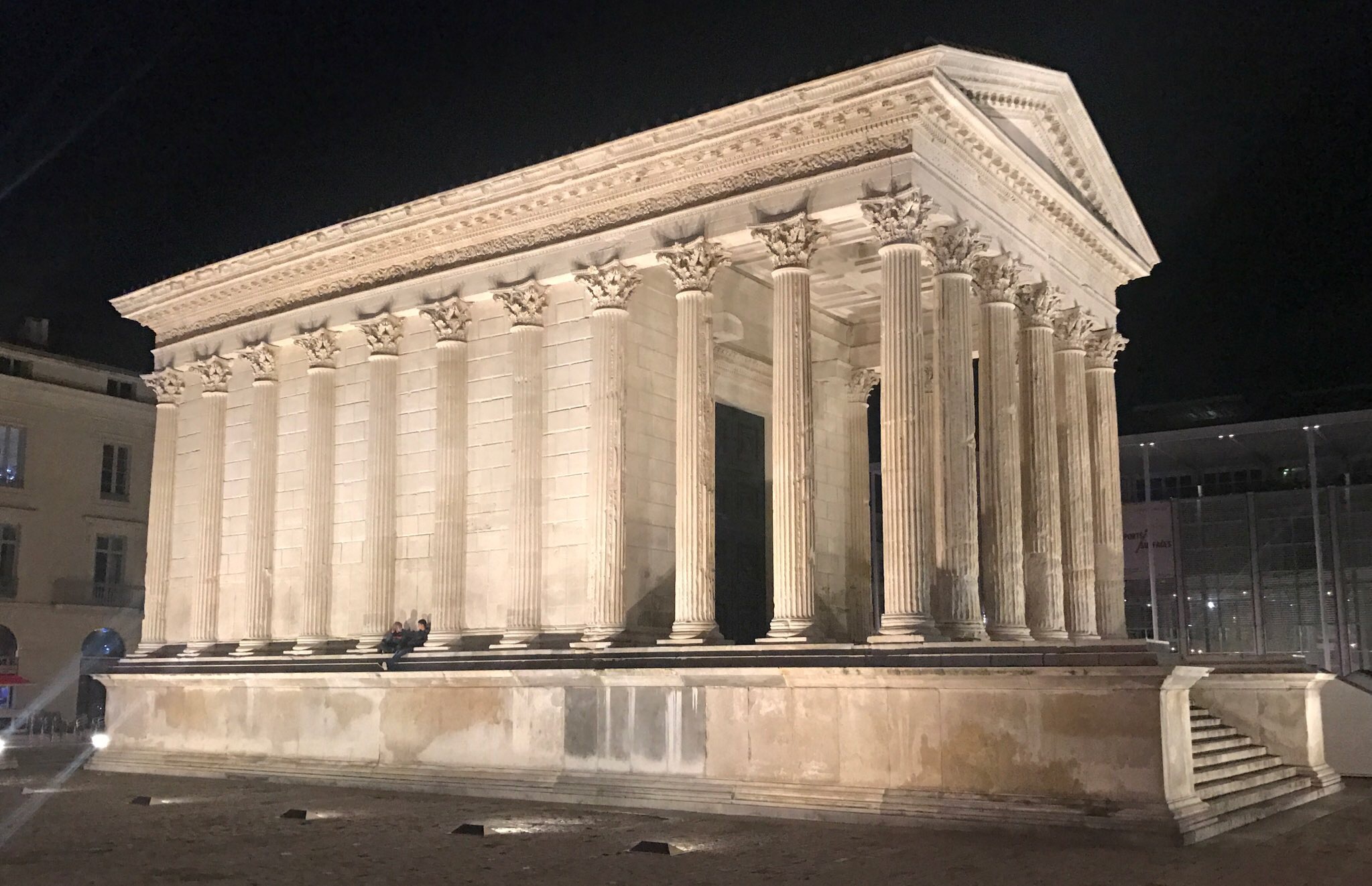
We were, of course, blown away by what we saw.  As many people reading this will know, the Maison Carée (literally, the square house – although it isn’t) in Nimes (Roman    Nemausus) is arguably one of the best, if not the best, preserved Roman Temple facades.   It sits in the original space of the Forum, high on its 2.8m plinth with its white marble glowing in the sunshine.  The impact remains dramatic two millennia after it was built.

IMG_3229

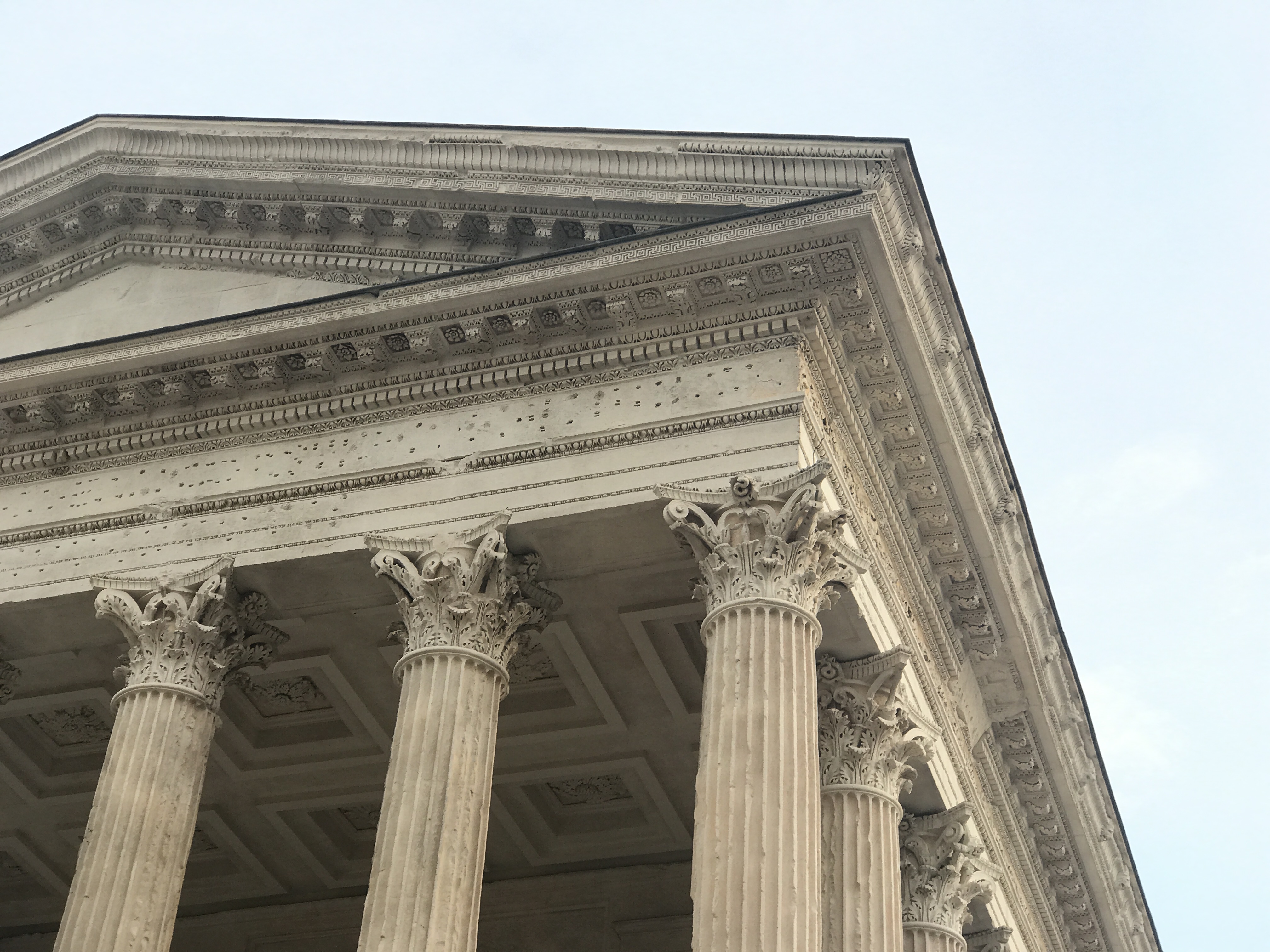
The Temple was dedicated c4-7AD to Gaius Caesar and Lucius Caesar, the grandsons and heirs of Augustus, who died tragically soon after.  If you believe Robert Graves, after Suetonius, both were poisoned by Augustus’ wife Livia to open the way for her son and Augustus’ step-son Tiberius to become Emperor.   The lettering of the dedication (“To Gaius Caesar, son of Augustus, Consul; to Lucius Caesar, son of Augustus, Consul-Designate; to the Princes of Youth”) had been removed from the facade in medieval times, but in 1758 a local scholar reconstructed it from the fixing holes left on the front frieze!

What we see today is the fruit of several reconstructions starting in Napoleonic times with the removal of accreted buildings, through to 1992 when the square around it was cleared. It inspired Thomas Jefferson’s design of the Virginian State Capitol.

IMG_1514

The building is remarkable in that the portico forms a third of the length of the building, and there are 20 columns engaged with the wall.  The frieze is exceptionally fine, decorated with rosettes and acanthus leaves.

There is nothing left inside of the sanctuary and altars that must have been there.  Perhaps more could be done to give a sense of the numinous atmosphere it would once have had.  There is, however, a good explanatory film which takes an unashamedly pro-Roman stance on the benefits to the local tribal leaders of joining Caesar as auxiliary cavalry and aiding him in suppressing their Gallic brothers and defeating Rome’s enemies.  The film then flashes forward to show the wealthy and now thoroughly Romanised citizens of Nemausus worshipping the Emperor.  It’s beautifully done and the re-enactors must have had a great time making it.  There is a gratuitous dig at Arles for being founded by former Roman soldiers rather than by the indigenous Gallo-Romans!  The master self-propagandist Julius Caesar would have been mightily impressed.

You could spend a lot of time describing the Maison Carée, but the key thing is how absolutely striking and atmospheric it is – in the sunlight (which we didn’t have much of at New Year) and especially when floodlit at night.

IMG_3213

IMG_3227

Introduction to Merida, Emerita Augusta

IMG_2288-1

Overall          6 ****** a must-see Roman Colonia with ‘one of everything’

Display         5 ***** informative bilingual display boards all around the City

Access           3 *** in a well laid-out archaeological park – parking is difficult

Atmosphere 6 ****** remarkable assemblage of Roman remains

Other             4 **** Merida has Spain’s Roman Museum (closed on Mondays of course!)

The Roman Colonia of Emerita Augusta was founded in 25 BCE by P. Carisius, legate of Augustus, for veteran soldiers (emeriti) from the bloody wars against the Cantabri in the north of the Iberian Peninsular.  The soldiers originally came from Legio V Alaudae and Legio X Gemina, and later from VI Victrix and VII Gemina.

Emerita guarded the principal crossing of the River Guardiana (Fl. Ana in Latin) and became the capital of the Roman Province of Lusitania.  The territorium of the Colonia stretched out as far as 100kms from the City.

The original settlement was probably a rectangle like a military camp, possibly with the surviving Arch of Trajan marking one of its gates.  Later, in the 3rd Century, a much larger city wall was built enclosing the amphitheatre and theatre in the north-east, to protect the City against the rampaging Franks and Alamanni who had by then broken into the Empire.

IMG_2374

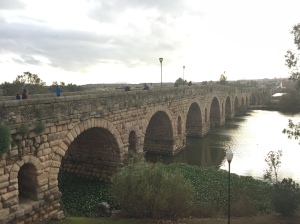
Emerita contains a remarkable assemblage of Roman remains including a bridge of 57 arches over the Guardiana which carried the Roman road from Asturica Augusta in the north to Italica in the south. (See our separate post about the bridge.)

IMG_2347-1

IMG_2361

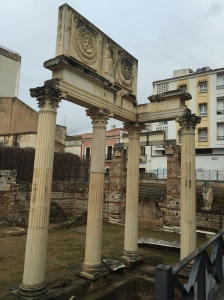
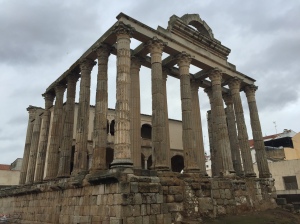
There are remains of the Forum and porticos, a Temple to Rome (wrongly called the Temple of Diana) adjacent to the Forum, and the remains of the Temple of Mars under the Church of Santa Eulalia in the west.

IMG_2315

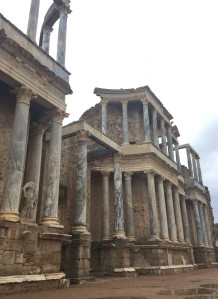
The most remarkable remains are the “entertainment quarter” in the north-east, containing arguably the best-preserved Theatre in the Roman World for refined entertainment, a large Amphitheatre for gladiatorial games, and a Circus for chariot racing.

Excavations at the Alcazabar (later Arab citadel) have revealed Roman streets and insulae inside a Roman wall, and remains of the Roman dyke that protected the river quality, an ancient forerunner of Bazalgette’s ‘interceptor sewer’ in London.

Emerita had a large population whose water consumption required advanced hydraulic systems fed by two large reservoirs, both of which are still in working order.  The Proserpina Reservoir could hold 8 million cubic metres of water.  Two aqueducts fed the town.

There is also a stunning Roman Archaeological Museum with the finds from Emerita, in a modern building made out of replica Roman brick. Sadly the museum was closed on our Monday visit to Merida (although we did see it years ago), so we will need to review it on a future occasion.

So why the very high score of 6 stars?  The Bridge, Amphitheatre and especially the Theatre are wonderfully preserved, they are well presented and there are enough other key Roman buildings preserved (temples, porticos and aquaducts) that it gives you a real feeling for what a major Roman Colonia was like.

Temple of Augustus and Livia, Vienne

IMG_9538

Overall Rating     ****     4 stars – almost complete early temple

Display                  *           1 – not much local information available

Access                    ***       in centre of city, parking difficult

Other                     Wow factor

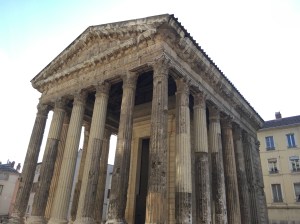
In the centre of Vienne in the Place du Palais you can stumble across the Temple of Augustus and Livia.  This is an almost complete early Imperial Temple, and you will be amazed.  It was erected at the end of the 1st Century BCE and dedicated to Augustus.  In 41 CE Claudius rededicated it also to Augustus’ wife Livia his grandmother.  Claudius was born in nearby Lugdunum.

It owes its survival, like the Maison Carée in Nîmes to being converted to a Church after the Theodosian Decrees.  In the Revolution it was used for the Festival of Reason.  The columns on closer examination are scared by wall fastenings of earlier centuries.  It as restored in the 19th Century when the centuries of church were stripped from the fabric.  No chance of doing such drastic changes these days, so we should be pleased with the courage of those times.

This temple really impresses in its completeness, when you are used to temples surviving as just columns.  It is almost the equal of Nîmes and deserves to be better known.

IMG_9545