
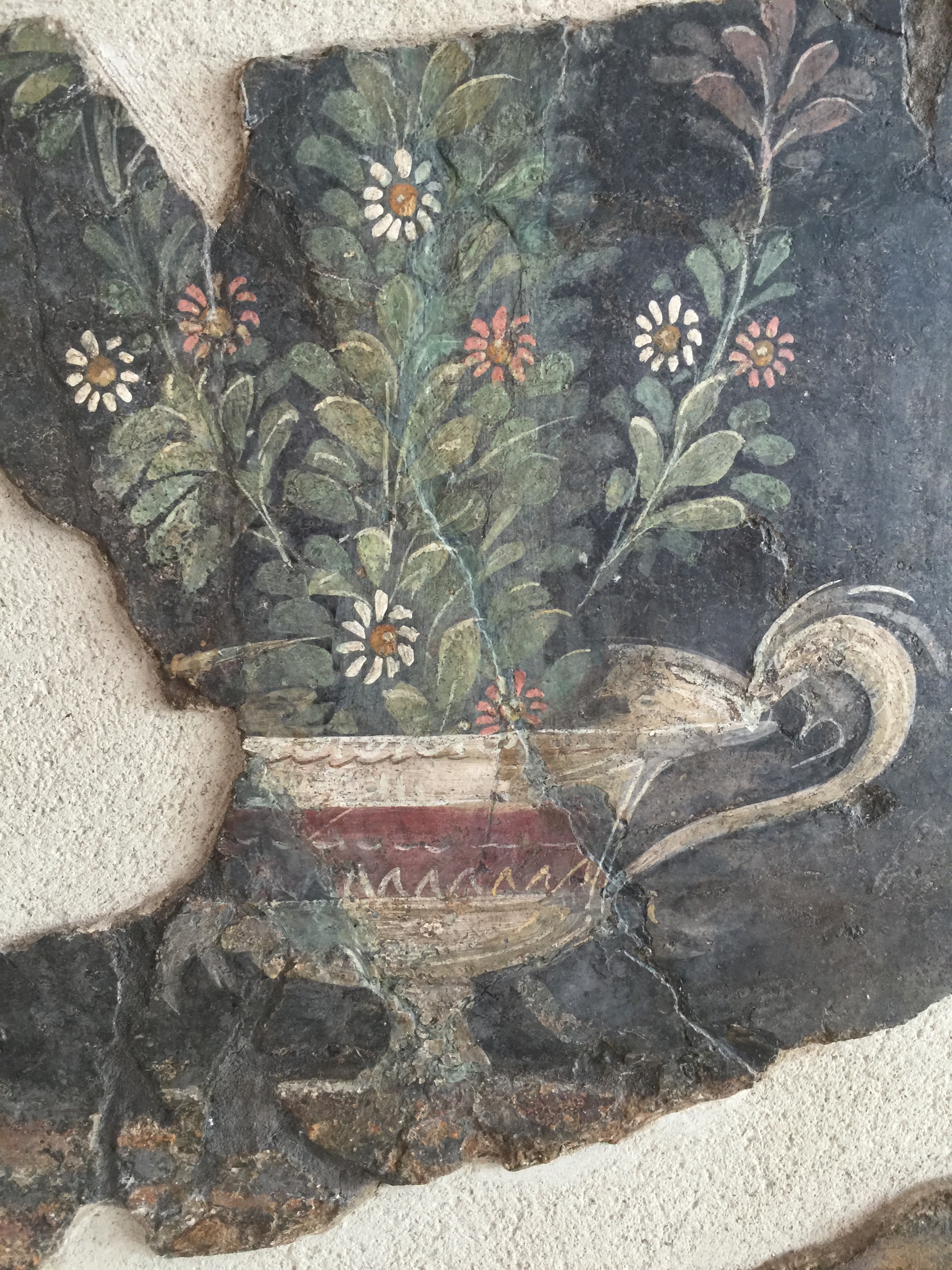
Overall *** 3 stars – remarkable mosaics
Display 5 artefacts displayed as works of art, models exceptional
Access 4 large car park with underpass to Museum
Other Museum almost overwhelms the exhibits!
Vienne was originally the capital (oppidum) of the civitas of the Allobroges, which stretched from the Rhone at Vienne to Lake Geneva.
This is a massive modern museum opened in 1996. It displays the finds from ancient Vienne in a spare and light modern manner. We saw it the day after the Museum in Lyon at Fouvière and although the permanent collection here contains some stunning exhibits – the mosaics stand out and are beautifully displayed, it is not quite its equal.
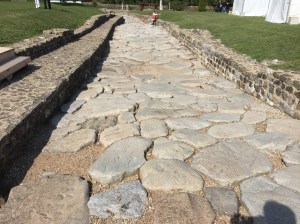
Outside there are the remains of the suburb of Roman Vienne, where the houses of wealthy citizens lined the road next to the palatial baths and exercise ground net to the Rhone. There is a workshop for the mosaic restorers and a space of temporary exhibitions in a second building, which forms the entrance.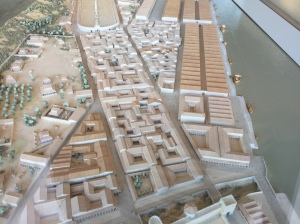
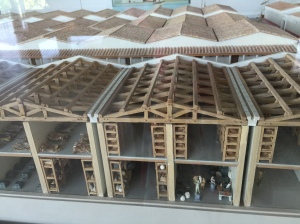
Vienna became a Roman colony in 47 BCE under Caesar and was in the old Transapline Gaul – Provincia. Herod Archaelaus was exiled here in 6 CE. In the later Empire it became the place of collection of the annona or tax in kind from the Gauls. As a result there are remains of massive warehouses lining the Rhone where the taxes were assembled before being transported to Rome. These are displayed by a series of model reconstructions.
Perhaps as a result of this role, Vienne (Vienna) became the capital of the late Roman Diocese of Vienensis, at last equalling its rival just up the Rhone at Lyon.
Again as an inhabitant of Britannia you are left wondering at the wealth and display of the Gauls compared to our off-shore island!
When we visited there was a Roman festival of re-enactors in progress, one of several events staged each year at the Museum. French re-enactment groups dressed appropriately lived like free-Gauls and Roman soldiers – sensibly kept well apart here. Also various groups re-constructed ancient wine and beer making, medicinal herb preparation, Celtic and Gallo-Roman cuisine. The tasting measures were alas depressingly small, although the re-enactments were impressive!
 Roman Sites